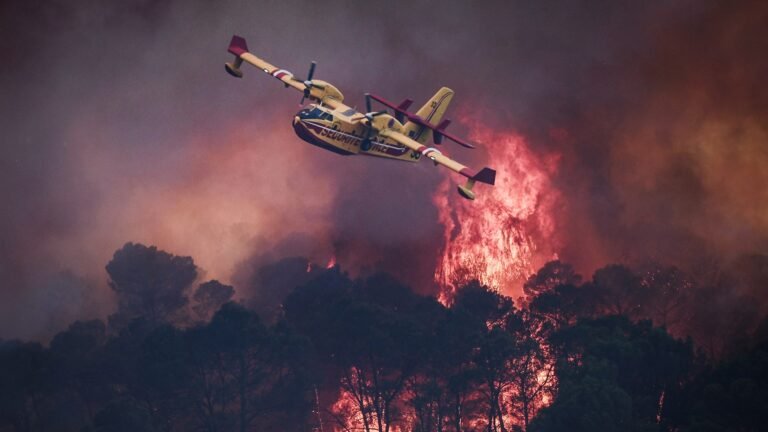
Paris, France – The French meteorological service has raised the alert level to orange in 45 departments due to a severe heatwave. This event is significantly increasing the risk of devastating wildfires. This heightened precautionary measure comes as France experiences a prolonged and intense heatwave affecting approximately 78 departments. As a result, the situation has put authorities on high alert to respond to any potential environmental or climate-related emergencies.
Official data from the French national meteorological service indicates that the second-highest level of fire warning currently covers 45 of the 96 departments that comprise the European part of France. Furthermore, warnings are particularly concentrated and widespread in several critical areas. These include most of Brittany, the entire Île-de-France region surrounding Paris, as well as Normandy. The warnings also include the northeastern parts of the country.
Strict water restrictions and drought effects
French authorities have declared a state of alert and raised warning levels for extreme heat in 78 departments. Official reports confirm that approximately 70% of France is currently under strict water restrictions. With the ongoing heat waves and significantly declining water levels, the threats associated with severe drought and wildfires have increased.
European heatwave and the repercussions of harsh climate
These dangerous climate developments coincide with several European countries experiencing severe heat waves. The greatest and most significant impact has been concentrated in southern and western European countries such as Spain, Portugal, France, Italy, and Greece. All these countries are facing immense pressure on their infrastructure due to widespread wildfires. In this regard, French President Emmanuel Macron has already warned of the severity of the current climate situation. He noted that France is experiencing the highest number of devastating wildfires on record since the end of World War II. This presents exceptional challenges. Therefore, it necessitates strengthening national preparedness and taking strict proactive measures to protect lives, property, and the country’s forest resources.