- Assassination of the military intelligence chief in Benghazi
- Drone attacks hit the Zawiya oil complex
- The refinery itself did not suffer direct damage.
- Why is angle important?
- Zawiya: A frequent security hotspot
- Precedents of targeting the refinery’s perimeter
- Political division remains a major backdrop
- The resignation of the central bank governor adds an economic dimension.
- Oil is at the heart of the equation
- Risks to fuel supplies
- The security situation faces a new test
- The United Nations warns of escalating violence.
Tripoli, Libya – Libya has witnessed simultaneous security developments in the east and west of the country in recent hours. These developments included the killing of a senior military intelligence official affiliated with forces based in eastern Libya in Benghazi. Libya also experienced a series of drone attacks targeting fuel storage facilities in the Zawiya oil complex west of Tripoli. These developments are particularly significant because they occurred at two highly sensitive facilities; the first is linked to the military and security apparatus in eastern Libya, and the second is a key energy and fuel distribution hub in the west of the country.
Assassination of the military intelligence chief in Benghazi
Major General Fawzi al-Mansouri, head of military intelligence for the forces loyal to the Libyan National Army (LNA) in eastern Libya, was killed when an improvised explosive device (IED) targeted his vehicle in Benghazi, according to security sources cited by Reuters. Libyan sources and reports confirmed that al-Mansouri held a senior position in military intelligence. No group has yet claimed responsibility for the attack.
The assassination of an official of this rank is considered one of the most significant security developments in Benghazi in recent times. This is especially true given that the attack was carried out using an improvised explosive device (IED), a method distinct from the direct armed clashes the city witnessed during the years of conflict. Major General Khaled al-Mahjoub, Director of Moral Guidance for the Libyan Army, stated that al-Mansouri’s death represents a major incident for the military establishment. Meanwhile, authorities have launched an investigation into the circumstances of the operation.
Drone attacks hit the Zawiya oil complex
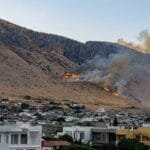
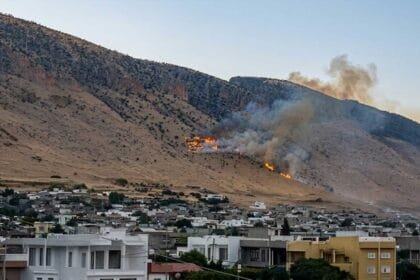
In the west of the country, the Zawiya oil complex was subjected to a series of drone attacks, beginning with a strike on a fuel storage tank. This resulted in a large fire. The National Oil Corporation (NOC) stated that one of the targeted tanks contained approximately 4.5 million liters of gasoline before collapsing due to the damage it sustained. The NOC confirmed that firefighting teams were able to control the blaze. No deaths or injuries among the workers were reported, according to available information. Reports indicate that other attacks targeted facilities near the complex, including fuel storage facilities and the vicinity of the power station. As a result of these attacks, the NOC raised its security and emergency alert level.
The refinery itself did not suffer direct damage.
Despite the severity of the attacks, the National Oil Corporation reported that the main damage was to fuel storage tanks and facilities. The refinery’s main refining units were not directly damaged. The Zawiya refinery has an operational capacity of approximately 120,000 barrels per day, making it one of the most important oil refining facilities in Libya. The Zawiya complex is also linked to the oil production and transportation system originating from the Sharara field, one of the country’s largest oil fields.
Why is angle important?
The importance of Zawiya lies not only in the refinery itself, but also in the fact that the area encompasses a network of oil facilities related to refining, storage, export, and fuel distribution. The continued targeting of these facilities means the danger extends beyond mere material losses. It also threatens the potential disruption of fuel supplies within western regions, particularly Tripoli and its surrounding areas. Brega Oil Marketing Company has confirmed that available stocks and supply shipments are sufficient to maintain stable supplies, despite damage to some storage facilities.
Zawiya: A frequent security hotspot
The recent developments in Zawiya are not occurring in a vacuum; the city has witnessed clashes and movements of armed groups in recent months. The United Nations Support Mission in Libya (UNSMIL) had previously warned of escalating violence and assassinations in Zawiya and the surrounding areas. In May, the mission stated that competition among armed groups for influence, territorial control, and access to state resources is one of the factors undermining security, weakening state institutions, and fueling impunity. In another statement, the mission also warned against the use of residential areas near the Zawiya refinery for military purposes. It asserted that endangering civilian infrastructure could lead to widespread humanitarian and economic repercussions.
Precedents of targeting the refinery’s perimeter
Current events reveal that the Zawiya oil facilities are not immune to the repercussions of armed conflict. Last May, armed clashes in the city resulted in projectiles landing within the oil complex. Consequently, the National Oil Corporation (NOC) evacuated its employees, preemptively shut down the refinery, and evacuated tankers from the Zawiya oil port. The NOC confirmed at the time that its emergency teams had taken measures to prevent an environmental disaster or further damage to the facilities. The refinery’s storage tanks had also been damaged by armed clashes in December 2024. This prompted the NOC to declare force majeure and a Level 3 emergency, its highest level of emergency response.
Political division remains a major backdrop
These developments are taking place in a country still suffering from institutional and political divisions between rival authorities and centers of power in the west and east. This division makes it even more difficult to impose a unified national security apparatus across all Libyan territory. In the same vein, it grants local armed groups considerable influence over security, politics, and the economy. Meanwhile, oil remains the country’s primary resource. For this reason, control over oil facilities and fuel supplies remains one of the most sensitive issues in the Libyan conflict.
The resignation of the central bank governor adds an economic dimension.
The security developments coincided with a significant political and economic development: the resignation of Central Bank Governor Naji Issa, submitted to the House of Representatives in the east and the High Council of State in the west, according to documents seen by Reuters. Issa confirmed the authenticity of the resignation documents but did not disclose his reasons, citing the sensitive nature of the issues that led him to make the decision. This comes at a time when control over financial institutions and the distribution of oil revenues remain among the most contentious points of disagreement between Libyan factions.
Oil is at the heart of the equation
Libya represents an exceptional case in the region due to its economy’s heavy reliance on the oil sector. Therefore, any threat to production, refining, storage, or export facilities could quickly escalate from a local security issue into a broader economic crisis. Libya has experienced several crises in recent years that led to the closure of oil fields and ports, resulting in reduced production and exports and placing additional pressure on the economy. These current developments come at a time when recent data and reports indicate that Libyan oil production has reached its highest levels in years. For this reason, protecting oil infrastructure has become even more critical for the Libyan authorities.
Risks to fuel supplies
Although the recent attacks have not yet led to a complete shutdown of the refinery, continued targeting of fuel storage tanks could place increasing pressure on the supply chain. The danger lies in the fact that storage facilities act as an intermediary between refining and distribution. Therefore, repeated disruptions to these facilities could lead to bottlenecks even if the refining units themselves remain operational. For this reason, the National Oil Corporation has confirmed that its teams are continuing to monitor the situation and are taking precautionary measures to ensure the continued supply of fuel.
The security situation faces a new test
Recent developments in Libya bring together three highly sensitive issues: military security, the proliferation of weapons, and the protection of oil resources. The assassination of a senior intelligence official in Benghazi raises questions about the security services’ ability to protect military leaders. Meanwhile, attacks on facilities in Zawiya reveal the vulnerability of oil infrastructure in areas experiencing armed activity. At the same time, the ongoing political and institutional crisis continues to hinder the establishment of a unified security apparatus capable of addressing these threats at the national level.
The United Nations warns of escalating violence.
The UN mission had warned in May that the continued mobilization of armed groups and assassinations in Zawiya could lead to a new wave of violence and increase the risks to civilians. The mission called for independent and transparent investigations into the killings, assassinations, and acts of violence, stressing the need to protect civilians and vital infrastructure. These warnings provide important context for understanding current developments. It is significant to note that these recent attacks come after months of international warnings about the fragile security situation in the western region.