- Rezaei returns to the heart of the security decision
- Change in the leadership of the Revolutionary Guard
- Why now?
- From the missile battle to the battle for survival
- Missiles and drones: the backbone of the Iranian response
- Marches as a weapon of attrition
- Air defense: The toughest test
- Hormuz enters the heart of the military equation
- Leadership rebuilding extends beyond Iran
- Washington is also facing a battle over stockpiles.
- Iran is redistributing roles within its military institutions.
- What does Tehran want from the restructuring?
- Iran faces a different test
Tehran, Iran – The recent military and security changes in Iran appear to be more than just a reshuffling of positions; they come at an exceptional moment in the ongoing conflict with the United States. They also follow months of strikes targeting Iran’s command structure and military capabilities, at a time when Tehran is attempting to reorganize its ability to continue fighting and negotiating simultaneously.
On August 10, 2026, Iran announced new appointments to top military and security positions, including the leadership of the Islamic Revolutionary Guard Corps (IRGC), its General Staff, and its Navy. This coincided with the appointment of former IRGC commander Mohsen Rezaei as Secretary of the Supreme National Security Council. These changes occurred amidst an ongoing war and negotiations related to the reopening of the Strait of Hormuz.
Rezaei returns to the heart of the security decision
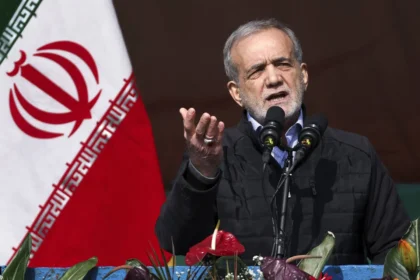
The appointment of Mohsen Rezaei is a key indicator of the new era. He is not a newcomer to the military establishment, having commanded the Revolutionary Guard for many years before moving into political, economic, and security positions. According to Reuters, Rezaei was appointed Secretary of the Supreme National Security Council, succeeding Mohammad Baqer Zolghadr. He was also appointed the Supreme Leader’s representative to the council, granting him a pivotal position within the institution that coordinates security and foreign policy matters. The return of a military figure of this stature to the center of decision-making is particularly significant in the context of the war, as military decisions have become directly linked to foreign policy, negotiations, the nuclear issue, and maritime security in the Gulf.
Change in the leadership of the Revolutionary Guard
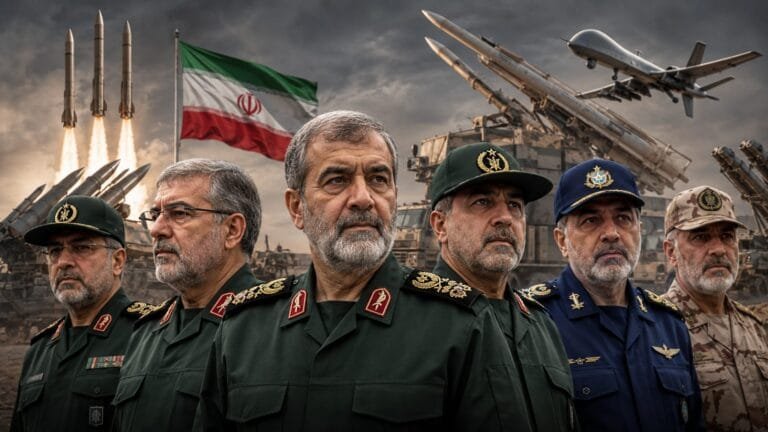
In one of the largest reshuffles of the Iranian military leadership since the war, General Ahmad Vahidi was appointed the new commander of the Islamic Revolutionary Guard Corps (IRGC), with Mostafa Izadi as his deputy. The changes also included the IRGC Navy, with Ali Azimaei appointed as its commander, along with other changes within the General Staff and the armed forces. This move comes at a time when the IRGC Navy occupies a crucial position in the Iranian equation, particularly given the Strait of Hormuz’s emergence as one of Tehran’s most significant bargaining chips in its dealings with Washington.
Why now?
The timing of the command reshuffle is highly significant. Iran is not making these changes during a period of calm, but rather after months of military operations that resulted in losses of military sites and commanders, and at a time when the Iranian command structure is under constant pressure. Recent reports indicate that the war has prompted Tehran to rebuild its military and security command structure, which was weakened during the conflict. Therefore, one of the immediate objectives of these changes is to restore the chain of command and ensure the operational capability of military institutions, even in the event of renewed attacks on command centers or communications.
From the missile battle to the battle for survival
The war demonstrated that Iran’s possession of a large stockpile of missiles and drones is not sufficient to guarantee sustained combat capability. The true value of weaponry lies in a nation’s ability to maintain a command and control system capable of issuing orders, identifying targets, redeploying units, and maintaining supply and production lines. Therefore, the ability to survive a first strike has become a critical element in Iranian military calculations. Estimates from the Institute for the Study of War suggest that Iran adapted its tactics during the confrontation, including the use of faster and more maneuverable missiles to counter U.S. defenses.
Missiles and drones: the backbone of the Iranian response
During the war, Iran relied on a combination of ballistic missiles and drones as its most effective tools for reaching distant targets and forcing the United States and its allies to operate costly defense systems. A study by the Center for Strategic and International Studies indicates that Iran launched more than 2,000 drones and approximately 500 ballistic missiles in the initial days of the war, before the launch rate subsequently decreased significantly. This reveals a different nature of the war: Tehran does not need to launch the same quantities daily, but rather seeks to maintain a stockpile and production capacity that allows it to retain the option of strikes for an extended period.
Marches as a weapon of attrition
Drones offer Iran a distinct advantage over ballistic missiles; they are typically less expensive and can be deployed in large numbers, forcing the opposing side to operate sophisticated interceptor systems. Iran is thus attempting to create an economic and military equation that compels its adversary to use costly interceptor weapons against relatively cheaper targets. Specialized analyses indicate that the war of attrition in this arena is measured not only by the number of drones shot down, but also by each side’s ability to produce and replace weapons at a faster rate than their consumption.
Air defense: The toughest test
Conversely, air defense represents one of Iran’s most sensitive points of vulnerability. The United States possesses advanced capabilities in reconnaissance, long-range strikes, and electronic warfare. Therefore, Tehran’s ability to protect its facilities, command centers, and missile launch sites depends on its capacity to rapidly rebuild its radar and air defense networks. In this context, changes in military leadership become part of a broader process of restructuring the defense system, not merely a replacement of personnel.
Hormuz enters the heart of the military equation
Meanwhile, the Strait of Hormuz has become a focal point for Iranian military power and foreign policy. Tehran is using its geographic location and naval and missile capabilities to pressure the United States, while the reopening of the strait has become linked to ongoing negotiations. Shipping traffic through the strait has slowed in recent days amid continued tensions and negotiations, indicating that the maritime crisis is no longer separate from the war itself. Reuters also reported that Iran is linking the reopening of the strait to concessions from the United States, while Omani mediation efforts between the two sides continue.
Leadership rebuilding extends beyond Iran
The realignment of Iranian capabilities doesn’t stop at the borders. Reuters reported in July that Iran had sent Revolutionary Guard personnel, advisors, and missile and drone-related equipment to Yemen, a move sources told the agency was aimed at bolstering its Houthi allies’ ability to threaten shipping in the Red Sea. This indicates that Tehran views the war as a multi-front confrontation, extending its leverage beyond Iranian territory and the Gulf to the Red Sea and its maritime routes.
Washington is also facing a battle over stockpiles.
On the other hand, the war is not without its strains on American capabilities. Recent American reports have addressed the pressure on US stockpiles of long-range missiles and munitions resulting from the ongoing operations against Iran, a factor that has become a recurring theme in the debate about Washington’s ability to maintain a high rate of strikes for an extended period. Thus, the war is gradually shifting from a confrontation based on American qualitative superiority versus the density of Iranian missiles and drones to a broader test concerning production, supply, rearmament, and the capacity to withstand attrition.
Iran is redistributing roles within its military institutions.
The recent changes place figures with extensive military experience in key positions within the decision-making apparatus. The new structure includes leaders from the army, the Revolutionary Guard, and security agencies, which could enhance coordination between institutions that typically operate under different structures. Analysts believe that the selection of leaders with wartime and military experience may be linked to the need to manage a phase where the potential for escalation remains, while simultaneously pursuing diplomatic efforts. Conversely, Iranian statements have emphasized that the appointments are based on the experience these leaders gained during the war.
What does Tehran want from the restructuring?
Three main objectives can be identified behind the restructuring of the Iranian military establishment. The first is to restore command and control cohesion after the blows dealt to decision-making centers. The second is to maintain missile and drone capabilities as the primary tools for deterrence and long-range pressure. The third is to link military decision-making to the political process, especially with Rezaei assuming a pivotal position in the Supreme National Security Council coinciding with the Hormuz peace negotiations. This makes the recent changes part of a comprehensive restructuring of the war management system, not merely a reshuffling of military appointments.
Iran faces a different test
The United States still possesses a significant qualitative edge in air power, reconnaissance, naval capabilities, and military technology. However, Iran is not engaging in the confrontation based on competing with Washington in these areas. Iranian strategy relies more on maintaining a viable missile and drone capability, distributing resources, utilizing geography, exerting pressure on shipping, and leveraging regional alliance networks. This makes command and control restructuring crucial, as sustaining the war requires an institution capable of functioning even after repeated attacks.