Tehran, Iran – On Tuesday morning, the Iranian capital, Tehran, witnessed a wave of anger and resentment among citizens following the implementation of sharp official price increases for various types of bread. In some varieties, the price hikes reached 100 percent, a move that surprised Iranian families already struggling with mounting economic pressures.
New price details
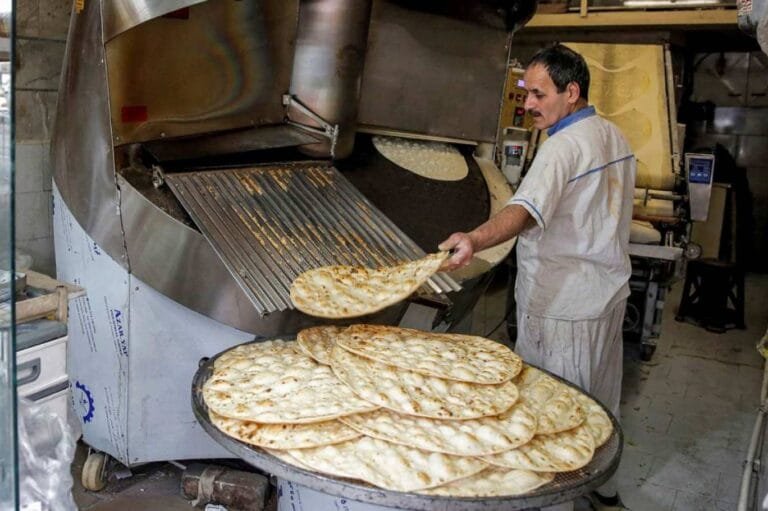
This announcement came from Mohammad Javad Karami, head of the Flour and Bread Working Group of the Iranian Chamber of Commerce. He confirmed that the new prices officially went into effect through bakery machines starting Tuesday. According to the official list approved by the Tehran governor’s office, the price of traditional lavash bread jumped to 2,700 tomans. The price of the popular barbari bread reached 10,000 tomans, while the price of sangak bread reached 15,500 tomans per loaf.
Field reports, including one published by Khabar Online, documented a state of shock among citizens who went to bakeries. They found that prices had effectively doubled, especially for lavash bread, which saw a 100% price increase compared to previous prices. This represents a direct burden on the purchasing power of the average citizen.
Contradictory government statements
This increase comes at a highly sensitive time. The issue of raising bread prices has sparked widespread debate in political and economic circles in recent weeks. Notably, several other Iranian provinces had already unofficially raised prices before the capital. As a result, this has led citizens to question the government’s true intentions.
Despite these developments, the Iranian government has repeatedly and categorically denied that a bread price increase was on its agenda. It has maintained that it is working to subsidize this essential commodity. However, the new prices have effectively refuted these official assurances.
Implications for low-income families
This economic crisis is considered the most severe of its kind, given that bread represents the “last line of defense” and a staple food for millions of low-income and limited-income families in Iran. With subsidies being reduced or prices rising, Iranian citizens find themselves facing a daily struggle to secure their basic needs. This comes amidst rampant inflation and a plummeting value of the local currency.
Economic experts believe this move reflects the government’s inability to continue subsidizing basic commodities amidst the country’s financial crises. It also raises concerns that these price increases could exacerbate social unrest, especially since bread is a strategic and indispensable commodity. Any manipulation of its price directly impacts the livelihoods of most segments of Iranian society. Therefore, this could foreshadow further economic and social crises in the coming period.
All eyes remain on the reactions of the Iranian public in the coming days. This will reveal whether the government will implement compensatory measures for the most affected groups or whether the situation will remain unchanged.