- 151 ships in one week
- The Omani route: the most dangerous alternative route
- 56 maritime incidents since the beginning of the war
- Ships prefer the route linked to Iran
- Warnings of mines and navigational interference
- Limited improvement does not mean navigation is back on track
- Hormuz: A crisis that goes beyond ships
- The Omani path is at the heart of the equation
Muscat, Oman – Commercial shipping traffic through the Strait of Hormuz has declined sharply since the outbreak of the US-Iranian standoff, with ongoing security risks prompting shipping companies to reduce transits or reassess routes within the strait. Available maritime data shows that traffic remains at a fraction of its usual levels. However, there has been a slight improvement compared to previous weeks.
151 ships in one week
According to the latest figures from the United Kingdom Maritime Trade Operations (UKMTO), approximately 151 vessels transited the Strait of Hormuz over a seven-day period. This represents roughly 17% of the pre-conflict average, averaging about 22 transits per day. Previously, transit levels averaged between 130 and 140 vessels per day, according to data from maritime monitoring centers prior to the crisis. Earlier data from the Joint Maritime Trade Operations (JMIC) indicates that the historical average was around 138 vessels per day. While this figure represents an improvement over the previous week, when traffic plummeted, it does not signify a return to normal shipping levels. Shipping industry data in July showed a significant decline in transit, with the average daily traffic dropping to around 14 vessels at times, compared to over 34 vessels at the beginning of July.
The Omani route: the most dangerous alternative route
The southern corridor, adjacent to Omani waters, emerged as an alternative route for ships seeking to avoid the danger zones associated with the northern route near the Iranian coast. However, this route is no longer considered entirely safe, as the area near Oman has witnessed several attacks in recent weeks. Consequently, these incidents have prompted shipping companies to reassess the risks of using this route. Specialized vessel traffic data shows a sharp decline in the use of the Omani route following attacks on ships near the Omani coast. This is particularly significant because, at the beginning of the crisis, the southern route was considered the most viable alternative for ships wishing to avoid the Iranian route.
56 maritime incidents since the beginning of the war
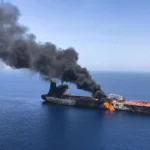
Data from international maritime monitoring centers indicates that 56 incidents involving commercial vessels have been recorded since the start of the war in the Persian Gulf, the Strait of Hormuz, and the Gulf of Oman. JMIC data at the end of June already recorded 56 incidents since March, and subsequent maritime incidents have continued to put pressure on shipping. In July, the UKMTO reported incidents targeting vessels near the Omani coast, including a tanker struck by a projectile while sailing in the southern shipping lane. This has reinforced concerns that the danger is no longer confined to waters near the Iranian coast.
Ships prefer the route linked to Iran
Ship tracking data for July revealed a notable shift in shipping behavior. On July 15, the majority of vessels transiting the Strait of Hormuz used the northern route through Iranian waters, while only a very limited number used the southern route. Specialized data attributes this shift to increased risks along the Omani route. Windward data indicates that the Iranian route accounted for the largest share of transits at several points in July, while usage of the Omani route declined significantly. This reflects the fact that shipping companies are not necessarily choosing the route that appears politically or militarily safest. Rather, they are selecting the route they perceive as offering the best chance of safe passage for their vessels, crews, and cargo without being targeted.
Warnings of mines and navigational interference
The risks are not limited to direct attacks; ships also face dangers related to sea mines and jamming of navigation systems. The International Maritime Organization’s evacuation plan guidelines state that the traditional traffic separation scheme in the Strait is not recommended due to reports of mines. Therefore, alternative routes are adopted and coordinated with coastal states. The plan identifies a northern route through Iranian waters and a southern route through Omani waters. Furthermore, maritime security experts have documented a high risk of GPS and AIS jamming in the region. This, in turn, makes it more difficult to accurately locate ships and monitor traffic.
Limited improvement does not mean navigation is back on track
Despite the increase in traffic compared to its lowest levels during the crisis, the gap from normal remains significant. Maritime data confirms that shipping companies still treat the strait as a high-risk area. Ships continue to delay their voyages, choose alternative routes, or employ additional security measures. JMIC data previously indicated that the historical average traffic was close to 138 vessels per day. In contrast, periods in July saw much lower figures, including days when traffic numbered only a few vessels.
Hormuz: A crisis that goes beyond ships
The continued partial paralysis of the Strait of Hormuz is gaining international significance due to the strait’s crucial role in global energy trade. Disruptions to tanker traffic not only affect ship owners but also impact oil and gas flows, marine insurance, transportation costs, and supply chains. Market data and analysis indicate that the decline in shipping traffic has been accompanied by a significant decrease in energy transported through the strait. Simultaneously, risks and costs associated with insurance and maritime transport have increased. The ongoing crisis has also led to a backlog of tankers and cargo in waiting areas outside the Gulf.
The Omani path is at the heart of the equation
Developments reveal that the problem is no longer simply whether the Strait of Hormuz is “open” or “closed,” but rather the ability of ships to safely use available routes. The southern route through Omani waters is a vital artery for continued navigation, but it too has been plagued by security incidents that have eroded shipping companies’ confidence. Conversely, greater reliance on the route through Iran does not eliminate risks, but rather shifts them to a different security environment. Thus, the most crucial figure in the Hormuz crisis is not just the number of ships transiting the strait, but also the ability of alternative routes to restore the confidence of shipping and insurance companies. As long as shipping traffic remains at a fraction of its pre-war levels, the strait will continue to be a major chokepoint for global trade and energy.