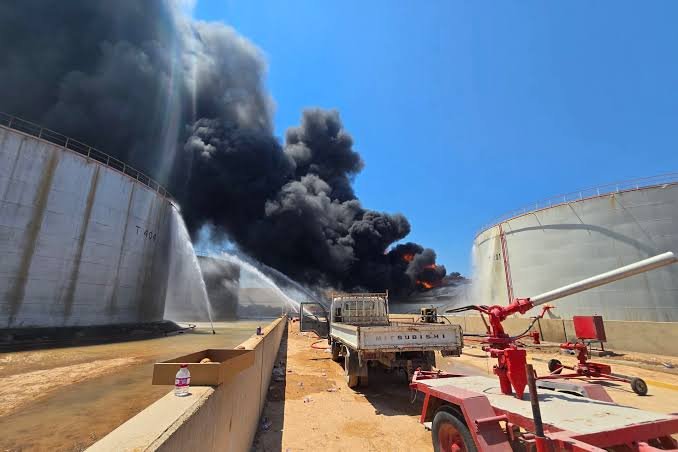
- August 8 start of thread
- August 10th, four and a half million liters under fire
- From oil to electricity
- August 12th: A blow to the heart of the electricity grid
- withdrawal of foreign expertise
- August 15th, a new explosion
- The lack of evidence about the “last minute” does not negate the importance of the bigger picture.
- Why the alzaia?
- Who is behind the attacks?
Tripoli, Libya – The events unfolding in the western Libyan city of Zawiya are no longer a series of isolated incidents targeting energy facilities. In recent days, oil and electricity installations have been repeatedly targeted, culminating in a new explosion near the Zawiya power station on August 15, which knocked generating units offline. A reconstruction of the timeline reveals that the threat is no longer confined to a single facility but has spread to several interconnected components within the energy system, from fuel depots and oil facilities to transmission and generation stations. The identity of those responsible for the attacks remains unclear. Official investigations have yet to determine the cause of the latest explosion or whether it was the result of a drone strike.
August 8 start of thread
According to available reports, the series of events began on August 8 with a drone strike targeting one of the tanks at the Zawiya oil facility.
Reports indicated that the tank sustained damage and a naphtha leak occurred, but no fire was reported. The scope of the attacks then expanded in the following days. The significance of this incident lies in the fact that it marked the beginning of a series of attacks that later targeted more sensitive facilities within the energy system.
August 10th, four and a half million liters under fire
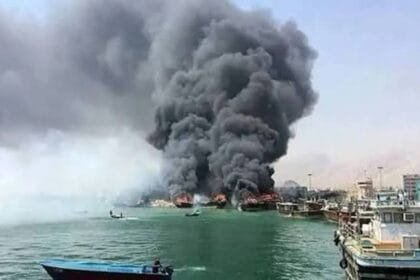
On August 10, a fuel tank at the Zawiya oil complex was attacked by a drone, according to international sources.
The National Oil Corporation (NOC) stated that the tank contained approximately 4.5 million liters of gasoline. It added that the attack caused a fire and the tank to collapse. Despite the scale of the damage, the refinery itself did not sustain significant losses. Fuel supplies continued, relying on existing stockpiles and incoming shipments. However, the significance of the attack extends beyond the targeted tank; the strike hit one of the most critical points in Libya’s energy grid.
From oil to electricity
The following day, the circle of danger widened to include electrical installations in the vicinity of Zawiya, while satellite images captured by the Sentinel-2 system showed plumes of smoke rising above the Zawiya oil complex. The indicators were no longer limited to fuel facilities alone; they began to touch the other link in the energy system: electricity. Here, the sequence becomes more significant than any single incident. Oil… then fuel… then electricity.
August 12th: A blow to the heart of the electricity grid
On August 12, the South Zawiya power substation was attacked by a drone, resulting in its destruction and being taken out of service.
The General Electricity Company of Libya (GECOL) stated that the attack caused power outages across large areas south of the city. Furthermore, official data revealed the extent of the impact more clearly, with over 700 megawatts of the Zawiya power station’s approximately 1,300-megawatt capacity being taken offline following the escalation. This shifted the losses from damage to individual facilities to direct pressure on the stability of the electricity grid.
withdrawal of foreign expertise
The impact of the escalation wasn’t limited to equipment. General Electric suspended its operations at the Zawiya power plant and withdrew its technical teams due to security concerns. This move carries implications beyond security; the withdrawal of specialized technical teams could slow down repairs and the return of damaged generating units to service. Thus, the damage is twofold: the facility was targeted, and its restoration is further complicated.
August 15th, a new explosion
On the evening of August 15, an explosion occurred near the Zawiya power station. The General Electricity Company confirmed that several generating units were out of service, and its technical teams began investigating the cause of the incident and working to gradually restore power.
The lack of evidence about the “last minute” does not negate the importance of the bigger picture.
Within a short period, a series of incidents unfolded, targeting: fuel depots → oil facilities → a power station → a substation → generating units. This sequence does not prove the existence of a single operations room or entity behind all the events. However, it reveals that the energy facilities in Zawiya were subjected to repeated pressure on multiple levels.
Why the alzaia?
Zawiya occupies a strategic position within Libya’s energy system. The city is home to the country’s largest operating refinery, with a capacity of approximately 120,000 barrels per day, along with storage and supply facilities and other energy-related infrastructure. The Zawiya power station is also a key component of the region’s power generation network. This makes Zawiya more than just a city that has been targeted. It is a hub where oil, electricity, fuel, and other vital infrastructure converge in a single geographical area. Therefore, an attack on one facility can have far-reaching consequences for other sectors.
Who is behind the attacks?
To date, no group has claimed credible responsibility for the series of attacks. Furthermore, linking the events to a local power struggle in western Libya does not, in itself, constitute proof of any party’s responsibility. Several hypotheses remain under investigation, including a local power struggle, an attempt to exert pressure on energy facilities, or a coordinated campaign against infrastructure. However, none of these hypotheses can be considered conclusive until independent forensic or intelligence evidence is available.