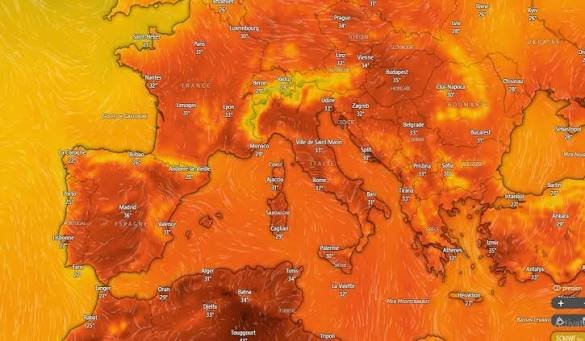
Brussels, Belgium – Europe is facing an exceptionally hot summer, with heat waves becoming more frequent and temperatures soaring to record highs. This extreme weather has reignited the debate about how well European cities are prepared to cope with the heat. This debate is particularly relevant given the relatively low rates of air conditioning use compared to other parts of the world. It is estimated that extreme heat causes tens of thousands of deaths annually in Europe. Meanwhile, there are warnings that the lack of cooling in homes and public buildings could exacerbate health risks, especially for the elderly and those most vulnerable to heat-related illnesses.
Air conditioning is at the heart of this debate, having been viewed for years in many European countries as a comfort rather than a health necessity. However, climate change and rising temperatures have prompted many experts to reconsider this perspective. This is due to the increasing frequency and intensity of heat waves during the summer. Europe faces a difficult dilemma: on the one hand, it needs to provide effective means of protecting its population from the heat; on the other hand, governments fear increased electricity consumption and emissions resulting from the widespread adoption of air conditioning.
Solutions don’t stop at installing air conditioning units; calls are also being made to improve building design and increase green spaces. Experts also emphasize the importance of using thermal insulation and developing more energy-efficient cooling systems. Furthermore, safe and cool spaces must be provided for the most vulnerable groups during heat waves. Experts warn that densely populated cities face greater risks due to the “island heat” phenomenon, which causes temperatures within urban areas to be higher than in surrounding areas. This, in turn, increases the pressure on the elderly, the sick, and those who work outdoors.
The recurring heat waves reveal that Europe is facing a new climate reality, with high temperatures becoming more frequent and intense. This reality compels governments to develop long-term plans to adapt to rising temperatures and protect their populations. While the debate continues regarding the increased use of air conditioning, there is a growing conviction that addressing heat is no longer a matter of luxury but rather a public health imperative, especially given the rising number of heat-related deaths. The real challenge for Europe remains striking a balance between protecting lives and reducing energy consumption. This can be achieved through more efficient buildings, greener cities, and less energy-intensive cooling technologies. Only then will they be able to cope with heat waves without creating new environmental crises.