- Gaza: The biggest test of Egypt’s role
- Ankara: A new chapter in crisis management
- Libya: National security on the western borders
- From Tripoli to Cairo… a continuous journey
- Washington: The party that cannot be ignored
- Palestine: Contact with more than one party
- The full picture… what do the movements say?
- Why is Cairo acting this way?
- The man who doesn’t appear much
- Cairo’s strength lies in its ability to communicate with those who are different.
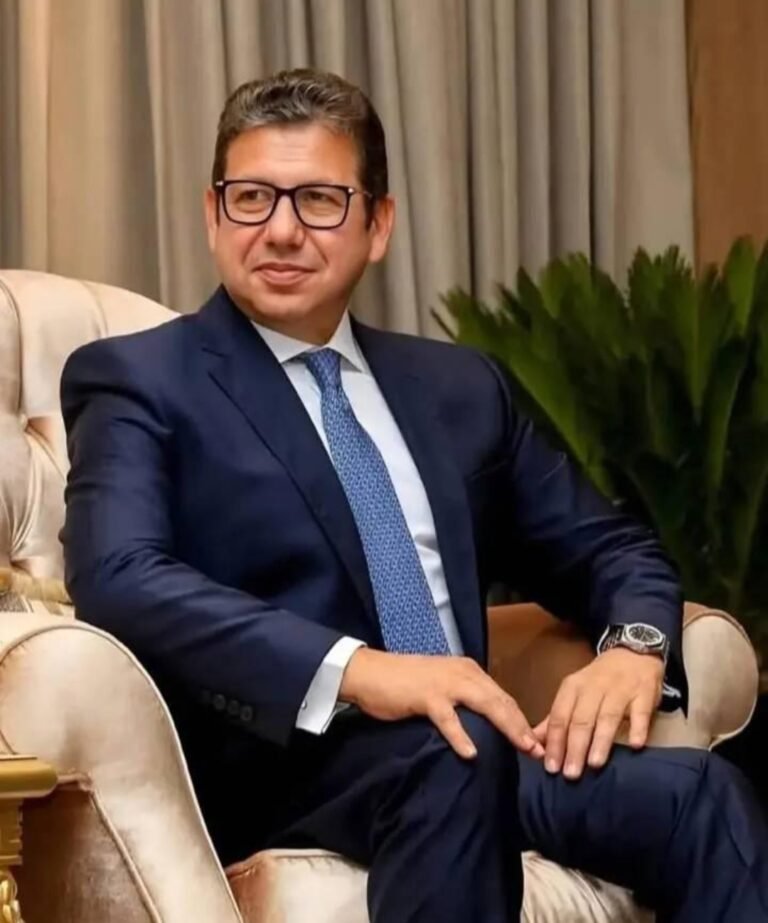
Cairo, Egypt – In a region where the crises in Gaza, Libya, Sudan, and the Horn of Africa intersect with the calculations of international powers, Cairo frequently appears at the points of contact between disparate parties. Egyptian General Intelligence Chief Hassan Rashad is prominent in a number of meetings related to these issues. While the public nature of these meetings doesn’t reveal what transpires behind closed doors, their chronological and geographical context paints a picture of the communications Cairo manages on matters directly linked to its national security and regional balances.
From Washington and Ankara to Tripoli and Gaza, the public record indicates that Egypt maintains open channels of communication with multiple parties, reinforcing its position as a regional mediator in crises that are difficult to address through traditional diplomatic channels alone.
From within the intelligence apparatus to the forefront of regional issues, Hassan Rashad assumed the leadership of the Egyptian General Intelligence Directorate in October 2014, succeeding Major General Abbas Kamel. Since then, his media presence has remained limited compared to political officials, which is consistent with the nature of his position, but his name has surfaced in connection with several highly sensitive regional issues.
The significance of these moves lies not only in the number of meetings, but also in the caliber of the parties he met and the issues discussed. The list includes American and Turkish officials, Palestinian figures, Libyan officials, and officials from African countries. Here, Cairo emerges as a point of contact between different paths, not as the sole party capable of resolving them.
Gaza: The biggest test of Egypt’s role
The Gaza Strip remains the most prominent issue on Egypt’s diplomatic agenda. Cairo has extensive experience mediating between Israel and Palestinian factions, in addition to its direct geographical location and connections with various parties. In June 2026, Rashad held talks with the head of Turkish intelligence, Ibrahim Kalin, in Cairo, which addressed developments in Gaza and Libya.
The Egyptian-Turkish meeting was not the only development. The two officials also met with Hamas leaders, coinciding with a Hamas delegation’s presence in Cairo for talks on the ceasefire agreement and the peace plan for the Gaza Strip. This reveals one of Cairo’s most important roles in the conflict: providing a channel of communication between parties that do not always have direct or stable channels of contact. Washington plays a key role in proposing settlement approaches, Qatar and Turkey are involved in mediation, while Egypt remains a pivotal player due to its location and its extensive relationships and contacts with Palestinian factions.
Ankara: A new chapter in crisis management
The frequency of contacts between Cairo and Ankara carries particular significance. Egyptian-Turkish relations endured years of political tension before a gradual normalization process began, restoring relations to a more stable level. Currently, issues such as Gaza and Libya have become areas of convergence for the two countries’ interests. This is evident in the meetings between Rashad and Ibrahim Kalin, which extended beyond bilateral relations to encompass shared regional crises. Herein lies a hallmark of Egyptian policy: addressing common interests even when political differences exist on certain issues.
Libya: National security on the western borders
If Gaza represents a model for mediation, then Libya represents for Egypt a file directly linked to its national security. In June 2026, Hassan Rashad traveled to Tripoli, where he met with the head of the Government of National Accord, Abdul Hamid Dbeibah, and a number of other Libyan officials. These Egyptian moves coincided with contacts related to the Libyan political process and the unification of security and military institutions.
In Cairo, Rashad also met with Field Marshal Saddam Haftar, in the presence of Massad Boulos, Senior Advisor to the US President for Arab and African Affairs. According to official statements, the meetings addressed supporting stability in Libya, bridging differences, and pushing for the unification of institutions. These moves are significant because they demonstrate Cairo’s engagement with various actors on the Libyan scene, at a time when political and security divisions remain among the country’s most prominent challenges.
From Tripoli to Cairo… a continuous journey
The visit to Tripoli was not an isolated incident. In July 2026, Rashad met with Libyan Deputy Defense Minister Abdel Salam al-Zoubi in Cairo, and the two discussed issues related to Libyan stability and the unification of military and security institutions. The continuation of these contacts indicates that Libya remains an active item on Cairo’s agenda, and not merely a matter related to a single visit or a fleeting meeting. Furthermore, the timing of some Egyptian moves with American and Turkish actions regarding the Libyan situation reveals a more complex nature of the landscape, where the interests of several regional and international powers intersect concerning the future of the Libyan state.
Washington: The party that cannot be ignored
In contrast, the United States appears as a key channel in the Egyptian communications network. Hassan Rashad participated in meetings between President Abdel Fattah al-Sisi and American officials concerned with Arab and African affairs, including Mosaad Boulos.
These meetings addressed various regional developments, including Gaza, Libya, Sudan, and other issues. Rashad also appeared as part of the Egyptian delegation in high-level meetings with the US administration, within the context of coordination regarding regional crises. However, a professional analysis of these meetings should remain within the bounds of what has been officially announced: the presence of the head of intelligence at these meetings confirms the importance of the security dimension in Egyptian-American relations, but it does not, on its own, reveal the nature or outcomes of any undisclosed communications.
Palestine: Contact with more than one party
Egyptian contacts are not limited to Hamas. Cairo has also held meetings and discussions with officials from the Palestinian Authority and Fatah leaders, alongside its ongoing engagement with Hamas. These channels reflect Egypt’s attempt to maintain contact with various components of the Palestinian political landscape, at a time when Gaza’s future is also linked to broader questions concerning Palestinian governance, reconstruction, and post-war arrangements. Thus, Cairo is not approaching the Palestinian issue solely from a military or security perspective, but is also striving to maintain its position in the discussions regarding the future of the Gaza Strip and the Palestinian political system.
South Sudan: The less visible face
Beyond Gaza and Libya, Egypt’s communications network extends to South Sudan.
In February 2026, Hassan Rashad met with a high-level delegation from South Sudan, headed by Tut Galwak, the South Sudanese president’s advisor on security affairs.
The meeting addressed cooperation between the two countries on issues related to regional security and stability.
This area may receive less media attention than Gaza, but its importance stems from South Sudan’s location in the Nile Basin and the Horn of Africa.
Here, another facet of Egypt’s security concept emerges, extending southward to encompass the Nile, the Red Sea, and the Horn of Africa.
The full picture… what do the movements say?
When the announced meetings are placed in one picture, a multi-directional map appears before us:
Gaza: mediation and communications with the Palestinian parties.
Libya: Border security, supporting the political track, and unifying institutions.
Türkiye: Coordination on common regional files.
United States: Consultation on crises in the Middle East and Africa.
Palestine: Contact Hamas and the Palestinian Authority.
South Sudan: Security and regional cooperation linked to the Nile region.
This map does not mean that Cairo holds the key to every crisis, but it reveals the breadth of Egyptian communication circles and the diversity of the parties that deal with them.
Why is Cairo acting this way?
Egypt’s geographical location makes it directly affected by several regional crises.
Gaza lies on its eastern border.
Libya on its western border.
Sudan to the south.
And the Red Sea and the Horn of Africa are within its strategic sphere of influence.
At the same time, Egypt maintains strategic relations with the United States, developing ties with Turkey, extensive partnerships with the Gulf states, and channels of communication with various Palestinian and Libyan factions. Therefore, maintaining parallel channels of communication can serve as a risk management tool for Cairo before regional crises escalate into direct threats to Egyptian interests.
The man who doesn’t appear much
Hassan Rashad’s journalistic significance lies in the paradox between his infrequent media appearances and the wide range of issues in which his name appears. He is not a diplomatic official issuing daily statements, nor does he typically appear at press conferences. However, when a crisis escalates to the stage of security communications and indirect negotiations, the intelligence chief’s name inevitably enters the picture.
Cairo’s strength lies in its ability to communicate with those who are different.
The map of Hassan Rashad’s public pronouncements in recent times reveals a clear pattern: Egypt is trying to keep all surrounding issues within its direct sphere of influence.
In Gaza, it engages with Palestinian factions and coordinates with international and regional powers.
In Libya, it deals with various actors on the political and security scene.
With Turkey, it coordinates on issues that were, until recently, a source of competition between the two countries.
With Washington, it maintains a direct channel on regional matters.
In Africa, it monitors issues related to the Nile and regional security.
Thus, Hassan Rashad’s story lies not only in his person, but also in the framework within which the institution he heads operates.
This man, who rarely appears in public, is brought to the forefront when crises necessitate channels of communication. The crucial question is not what transpires behind closed doors—for that cannot be known without direct sources—but rather: why is Cairo so keen to be present at most points of contact when regional crises shift from confrontation to negotiation?
The publicly available facts offer a preliminary answer: Egypt’s geographic location, security interests, and network of regional relationships make disengagement from these crises more costly than participating in managing them. Here, the General Intelligence Directorate, operating discreetly, becomes one of the tools Cairo uses to maintain its position as a liaison, mediator, and stabilizing force in a rapidly changing region.