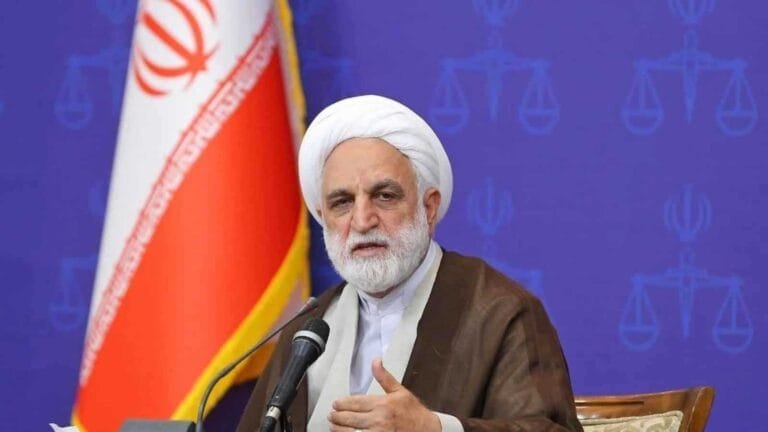
Tehran, Iran – Gholamhossein Mohseni Ejei, head of Iran’s judiciary, announced during a meeting of the Supreme Judicial Council that enemies may again resort to various hostile tactics. These tactics include coups, fomenting unrest, and direct military aggression. Mohseni Ejei stressed the need for complete vigilance and not ignoring the enemy’s influence and malicious plots. These plots aim to undermine national unity and erode Islamic values in the country.
The head of the judiciary added that the opposing side did not stand idly by, but rather imposed a “comprehensive joint war” on the Iranian people and regime. In the same vein, he expressed his complete confidence in the ability of Iranian institutions to overcome these challenges and achieve victory. On a separate domestic matter, he indicated the possibility of some administrative transfers and changes among officials within the judiciary. He urged that these steps not be interpreted with political dimensions or explained away from their purely professional purpose.
Iranian Foreign Ministry: The 60-day deadline with Washington is worthless
In a related development, Iranian Foreign Ministry spokesman Ismail Baghaei held his weekly press conference, where he announced a firm stance on the Islamabad agreement. He emphasized that “there is no such thing as a 60-day deadline” in the memorandum of understanding. Baghaei clarified that Tehran does not base its strategic decisions on ultimatums or predetermined deadlines.
The spokesperson noted that the two sides were supposed to engage in serious negotiations on the nuclear issue during that period. However, extensive US violations rendered the agreement meaningless and brought the talks to a complete standstill. It is worth noting that the 60-day deadline for the 14-point Islamabad agreement (signed in Switzerland last June with Pakistani mediation) has expired without an agreement to extend it.
Mutual accusations and faltering diplomatic efforts
On the other hand, the United States accused Iran of failing to fully reopen maritime routes. Tehran, meanwhile, insisted on its refusal to accept any changes to the Strait of Hormuz before the lifting of financial sanctions and the release of frozen assets. Amid press reports indicating Iranian preparations for a regional escalation through the Revolutionary Guard, mediating parties continue their efforts through indirect channels to salvage the diplomatic process.