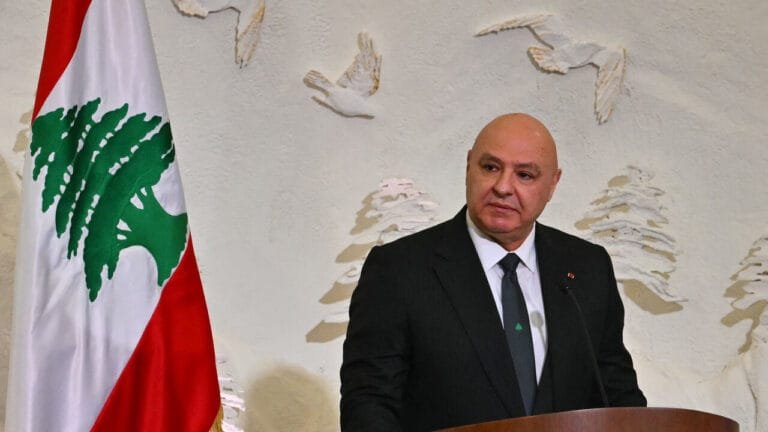
Beirut, Lebanon – Lebanese President Joseph Aoun affirmed that his top political priority is extending the mandate of the United Nations Interim Force in Lebanon (UNIFIL). He emphasized that the presence of these forces plays a pivotal role in helping residents remain in their border villages and towns. Aoun noted that this international presence strengthens stability throughout the region. Furthermore, this is achieved through ongoing cooperation and coordination with the Lebanese Armed Forces, which remain the primary guarantor of security in the south of the country.
Rejecting the Israeli pressure that has been ongoing since 1990
In this context, the Lebanese president praised the parliamentary initiative and the broad petition calling for the extension of the mandate of the international forces. He considered this approach to be of utmost priority under the current critical circumstances. Aoun also revealed that Israel rejects the presence of UNIFIL and has been exerting continuous political and field pressure to expel it from southern Lebanon for nearly a year. This position is completely contrary to the official Lebanese view, which insists on the continuation of this vital international presence.
Studying alternative options to ensure international attendance
Aoun explained that the Lebanese government is currently considering two main approaches to dealing with this issue. The first and preferred option is to extend UNIFIL’s mandate within its current framework and without modification. The second, alternative option—should the first extension prove impossible—is to adopt an alternative formula that guarantees the continued presence of international forces in the south within a precise legal framework. The Lebanese president concluded by emphasizing that the primary objective is to achieve a diplomatic breakthrough that ensures the continued international presence alongside the Lebanese army. This would strengthen the role of state institutions and preserve stability amidst the escalating security challenges and military complexities plaguing the region.