- The beginning is not with the collapse of the water
- After 30 days… the storage battle begins
- After 90 days… Ethiopia faces the electricity equation
- After 120 days… Sudan is in the middle of the equation
- After 150 days, the test arrives in Egypt.
- Egypt and Ethiopia: Two narratives of one river
- Who has the emergency button?
- When drought becomes a political crisis
- The second battle began
- The biggest danger is not the new dam.
Cairo, Egypt – The Grand Ethiopian Renaissance Dam (GERD) crisis is no longer solely about the size of the reservoir or the number of years required to fill it. It is gradually evolving into a more critical test: what will happen when the Blue Nile faces a prolonged drought, while Ethiopia’s dam system operates to meet its electricity generation needs, and Egypt and Sudan simultaneously require stable water flows? This scenario gains particular importance with the escalating Egyptian-Ethiopian dispute over the future of the Blue Nile. Cairo has reiterated its rejection of any attempt to unilaterally control the river’s flow to downstream countries, while Addis Ababa asserts its right to utilize its water resources for development and electricity generation. However, behind the exchange of statements lies a more complex battle: who has the authority to decide when the region experiences consecutive years of drought?
The beginning is not with the collapse of the water
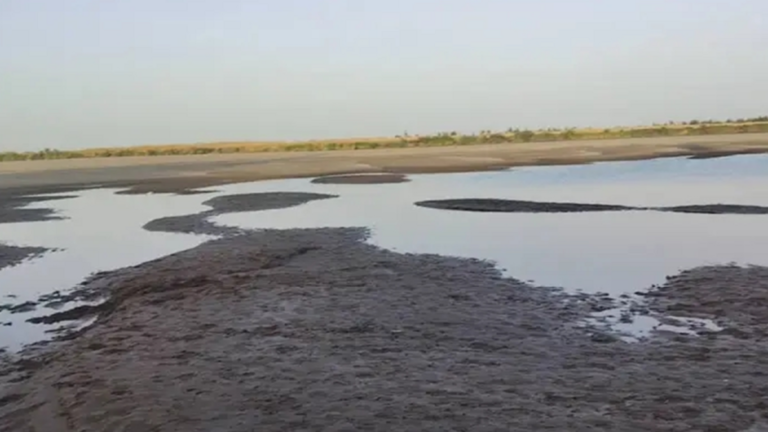
The drought scenario begins less dramatically than some might imagine. Seasonal rainfall in the Ethiopian highlands falls below normal levels, and then the flow gradually decreases. The impact isn’t immediately felt in Egypt because the large reservoirs can absorb some of the shock and postpone its effects. However, hydrological studies confirm that the Nile’s flows fluctuate significantly from year to year. A historical reconstruction of flows at Aswan shows that the natural annual inflow between 1900 and 2018 ranged from approximately 45.6 to 120 billion cubic meters, with an average of around 86.5 billion cubic meters. Herein lies the fundamental problem: the river doesn’t provide a constant amount of water each year, while the needs of the countries don’t cease when rainfall declines.
After 30 days… the storage battle begins
When water flows decline, reservoirs transform from facilities for generating electricity and providing water into tools for crisis management. Every drop of water held today becomes part of the decision countries will make weeks or months from now. Here, the Grand Ethiopian Renaissance Dam (GERD) intersects with the Aswan High Dam, forming a single system despite being located in different countries. Studies published in peer-reviewed scientific journals indicate that managing multi-year droughts in the Eastern Nile Basin depends heavily on how well dam operations are coordinated and data is shared between Egypt, Sudan, and Ethiopia. A reservoir can postpone a crisis, but it cannot prevent a drought.
After 90 days… Ethiopia faces the electricity equation
For Ethiopia, the Grand Ethiopian Renaissance Dam (GERD) is essentially a strategic project for electricity generation and supporting economic development.
Herein lies one of the most sensitive points of contention. Under normal hydrological conditions, Ethiopia can retain water and operate the turbines according to its needs, while downstream countries receive relatively regular flows.
But a prolonged drought presents a different equation: the longer Ethiopia retains water, the greater its ability to protect the dam’s reservoir and generate electricity in the future; and the more it releases water, the greater the available flow to downstream countries. This doesn’t mean Ethiopia faces a simple choice between electricity and water, but it does highlight the importance of joint operating rules during periods of drought.
After 120 days… Sudan is in the middle of the equation
Sudan is the first downstream country to directly experience the outflows from the Grand Ethiopian Renaissance Dam (GERD), and therefore stands to be one of the biggest beneficiaries of river regulation, while simultaneously being one of the most vulnerable to any sudden changes in flow. Studies indicate that regulated water flow can help Sudan mitigate flood risks, improve the operation of its hydroelectric facilities, and utilize the water for irrigation.
But this requires a fundamental condition:
The ability to know what is happening upstream.
How much water is being stored?
How much water is entering?
How much water is leaving?
And when will the release rates change?
The more facilities there are on the Blue Nile, the more important this data becomes.
After 150 days, the test arrives in Egypt.
At this stage, the High Dam begins to function as a line of defense against fluctuations in water flow. However, Egypt faces a radically different situation than upstream countries; the Nile is the primary source of water, and water security is directly linked to drinking water, agriculture, and industry. Scientific models indicate that coordinated operation between the Grand Ethiopian Renaissance Dam (GERD) and the High Dam can mitigate the effects of some drought scenarios, while a lack of coordination increases pressure on water reserves. The greatest danger lies in multi-year droughts, not in a single dry year. The first year’s impact can be partially absorbed. However, repeated droughts gradually deplete reserves and transform every operating decision into a political issue.
Egypt and Ethiopia: Two narratives of one river
Ethiopia’s vision is based on the country’s right to utilize its natural resources for energy generation and development. Addis Ababa asserts that the Grand Ethiopian Renaissance Dam (GERD) can benefit countries in the region by regulating water flows and providing electricity. Cairo, however, views the matter differently: the right to development should not translate into unilateral control over a transboundary water resource. Hence, Egypt’s warning against any control over the Nile’s flow to downstream countries.
The dispute, at its core, is not about who owns the river, but rather who has the power to decide on its operation when water becomes scarce.
Studies and models reveal a surprising finding: additional dams primarily intended for power generation may have a limited impact on average flows if they are not accompanied by a significant expansion in water use for irrigation. However, the picture changes when agricultural water withdrawals, additional storage, and multi-year droughts are factored into the equation.
Here, the real danger lies not in the dam itself, but in:
Water storage + new water uses + operating regulations + drought.
Who has the emergency button?
This is the question that the first prolonged drought crisis will pose.
Who decides how much water to release?
Who decides how much water to retain?
Will Ethiopia reduce its electricity production?
Will Sudan curtail its agricultural use?
Will Egypt implement stricter water demand management measures?
And who, in the first place, determines that a region has entered a phase of “exceptional drought”?
These questions cannot be answered by dams alone. Nor can satellites or mathematical models resolve them.
They require clear operating rules, reliable data, and a coordination mechanism capable of functioning under the most challenging conditions.
When drought becomes a political crisis
Scientific research offers a crucial point: cooperation in dam operation does not necessarily mean one party losing out to another. Models published in scientific journals indicate the possibility of achieving mutual gains through coordinated dam operation, allowing Ethiopia to reap energy benefits, Sudan to obtain more regular water flows, and Egypt to mitigate the risk of water scarcity during certain drought scenarios. However, this outcome hinges on the existence of information sharing and effective operational coordination. It is precisely here that the scientific study aligns with the core of the Egyptian position.
The second battle began
The initial battle surrounding the Grand Ethiopian Renaissance Dam (GERD) was over its construction and filling. The next battle may be far more complex: the battle over its operation. With each new dam on the Blue Nile, the number of storage and power generation points increases, and the system’s capacity to regulate water flow timing expands. Conversely, the need for a unified drought management system also grows. Thus, the question shifts from: Should Ethiopia build a new dam? to: How will the dam system function when there isn’t enough water for everyone?
The biggest danger is not the new dam.
The most dangerous scenario may not be the construction of an additional dam per se. The real danger lies in the region entering a prolonged drought while several facilities operate under separate national regulations, without a binding crisis management mechanism. Technical decisions could then become political:
Reducing water storage.
Increasing power generation.
Delaying water releases.
Expanding or reducing irrigation uses.
Refilling reservoirs.
At this point, the river itself becomes a bargaining chip.