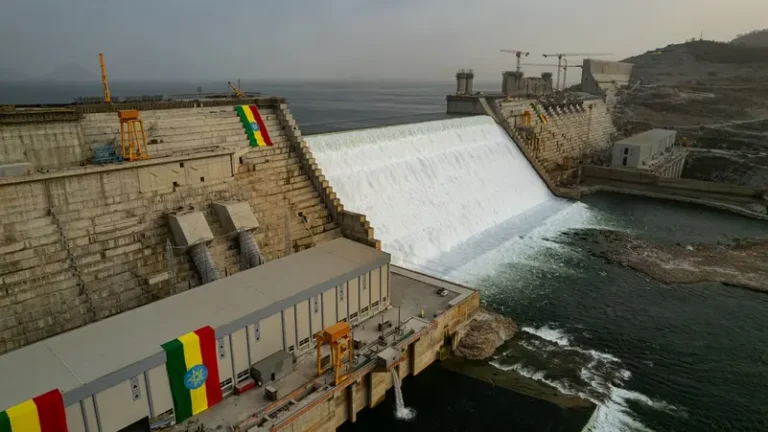
ADDIS ABABA, Ethiopia – The Ethiopian Renaissance Dam is officially becoming a reality on Tuesday, nearly 14 years later, with the announcement of its opening.
It is the dam that was the subject of a sharp dispute between Egypt and Sudan on the one hand and Ethiopia on the other.
It will officially see the light after the construction work is completed.
Even after its completion, controversy still accompanies this dam just as it did throughout the years of its construction.
The three parties concerned with this dam have not yet reached a consensus formula.
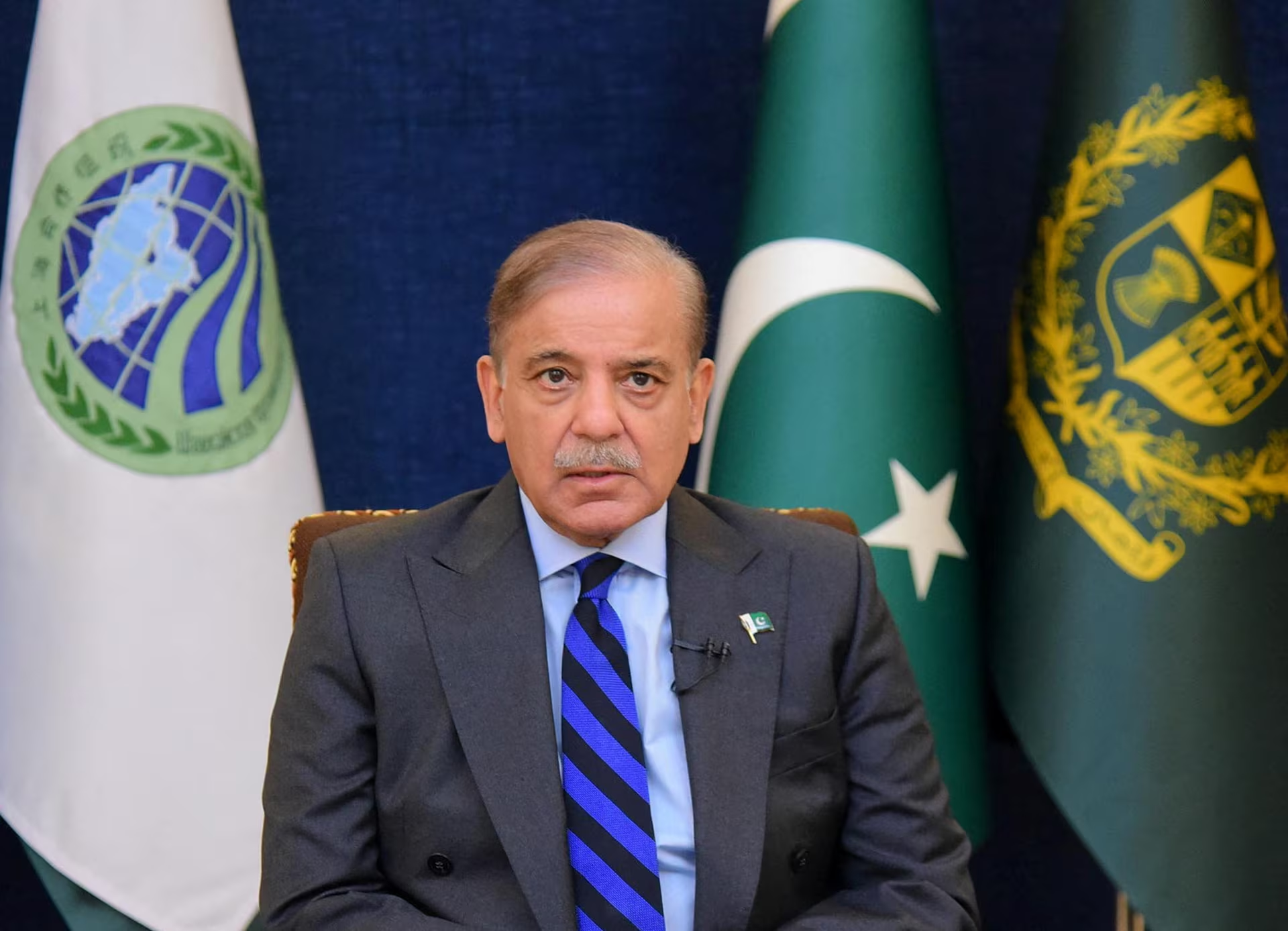
Ethiopian Prime Minister Abiy Ahmed returned to repeat the same reassuring speech to his neighbors.
He stressed that the dam does not pose a threat to either Egypt or Sudan.
He also stressed that his country uses the resources of the transboundary river only to a limited extent. Ethiopia has not taken anything that does not belong to it.
Nile River
Speaking of the Renaissance Dam and the importance of the Nile to my downstream country, Egypt depends almost entirely on the waters of the Nile River.
Its water resources amount to about 60 billion cubic meters annually. Most of this comes from the Nile, 55.5 billion cubic meters (about 90%).
As for Sudan, water resources are estimated at approximately 38 billion cubic meters annually. This consists of 18.5 billion cubic meters of the Blue Nile. The remainder comes from other rivers, floods, and groundwater.
Ethiopia, the second most populous country on the African continent with 120 million people, believes that the large Ethiopian Renaissance Dam is essential to its ambitions for economic development. It costs five billion dollars and is built on a tributary of the Nile River.
Construction of the dam began in 2011. Power generation is expected to eventually rise to 5,150 megawatts from the 750 megawatts produced by two already operating turbines.
Prime Minister Abiy Ahmed said Ethiopia will use the energy to improve electricity access to citizens. It will also export the surplus to the region.
Ethiopia insists that the project is a sovereign right and has moved forward with its implementation.
In 2020, it began filling the reservoir in stages. They stated that the dam would not cause significant harm to the two downstream countries.
Abiy Ahmed told Parliament in July (July) that “the Renaissance Dam is not a threat, but a common opportunity.. The energy and development that the dam will generate will not advance Ethiopia alone.
Local media report that the Ethiopian Central Bank provided 91% of the project’s financing.
While Ethiopians financed 9% through bond sales and donations, without any foreign aid.