The Permanent Mission of France to the United Nations outlined Paris’s updated strategic vision for managing intensifying crises across the Levant and the Gulf. The current focus of France foreign policy Middle East prioritizes multilateral diplomatic frameworks. This strategy aims to decisively prevent Tehran from acquiring or developing military-grade nuclear hardware. Addressing the UN Security Council, the French representative affirmed that political negotiations present the only structural guarantee for regional stability. In addition, he warned that preemptive military escalations would dismantle global peace preservation efforts across Western Asia.
Securing International Waterways and Safeguarding Navigation Integrity in the Strait of Hormuz
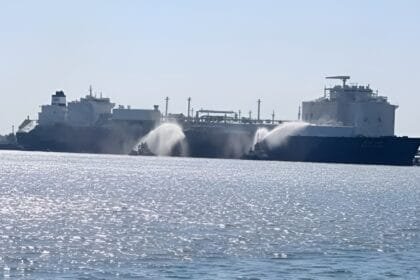
The French administration places international maritime freedom at the absolute vanguard of its contemporary security and economic priorities. The envoy explained that the continuous, unobstructed flow of global commerce and energy through the Strait of Hormuz remains a critical interest for the global community. Therefore, Paris demands the activation of collaborative naval monitoring protocols. It also calls for the complete avoidance of unilateral actions that compromise ultra-large crude carriers (ULCCs). These actions directly inflate transcontinental ocean freight rates and destabilize global commodity markets.
French diplomatic bodies, coordinating with European partners, are working to revitalize communication channels with Tehran. This aims to reinforce the International Atomic Energy Agency’s (IAEA) tracking capabilities. This regulatory intervention aims to restore institutional trust and mitigate international anxieties regarding domestic uranium enrichment thresholds. Paris maintains that Iran’s integration into the global financial architecture correlates directly with its verifiable compliance with anti-proliferation treaties brokered by global powers.
Stabilizing Ceasefires in Lebanon and Gaza to Counter Total War Risks
Conversely, France cautioned against the severe humanitarian and security outcomes resulting from the expansion of armed conflicts. The representative stressed the immediate necessity of honoring ceasefire declarations across Lebanon and the Gaza Strip. She mandated the enforcement of landmark international mandates such as UN Resolution 1701. Paris views stabilizing these frontlines as a non-negotiable step. This step insulates the region from collapsing into a total war that threatens sovereign border integrity and civilian infrastructures.
French diplomatic units are multiplying engagements with Middle Eastern stakeholders to expand humanitarian deployment tracks. They also facilitate reconstruction blueprints in devastated territories. The current geopolitical landscape requires international capital commitments. This is needed to fund refugee assistance networks and secure medical supply channels for affected populations. Tracking the evolutionary trajectory of this France foreign policy Middle East remains a primary metric. It determines the efficacy of international peacekeeping initiatives in the region.