
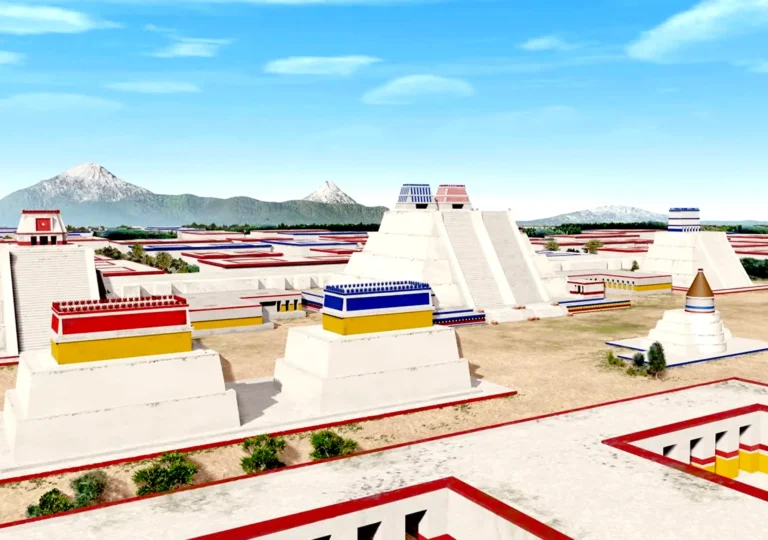
Mexico City, Mexico – Archaeologists in Mexico have announced a new archaeological discovery beneath the streets of the capital, Mexico City, revealing previously unknown details
about the sacred area of the Aztec civilization, in a move expected to contribute to
a deeper understanding of the nature of this civilization that flourished in Central America more than five centuries ago.
Huge temples and ritual squares
The discovery was made during excavations in the historic center of the capital,
where researchers unearthed architectural remains
and stone structures believed to have been part of the religious and administrative complex of Tenochtitlan,
the ancient capital of the Aztec Empire, upon which present-day Mexico City was built after the Spanish conquest.
The research team explained that the finds include fragments of historical buildings
and structural elements that reveal the urban design of the sacred area,
which encompassed monumental temples and plazas for religious rituals and ceremonies,
as well as facilities used for managing state affairs.
A civilization that left a prominent mark
Researchers noted that the new archaeological finds reflect the advanced
level of engineering and architecture achieved by the Aztec civilization,
and help clarify how the ancient city, one of the largest and most important urban centers in the world at the time, was organized.
Archaeologists confirmed that excavations are ongoing, with expectations of uncovering
more historical landmarks buried beneath modern buildings and roads.
This could provide new insights into the daily lives and religious beliefs of the empire’s inhabitants.
These discoveries are considered a significant addition to Mexico’s heritage record,
contributing to a re-evaluation of the Aztec capital
and revealing a new facet of a civilization that left a prominent mark on the history of the Americas,
and whose remains continue to fascinate researchers and visitors from around the world.