
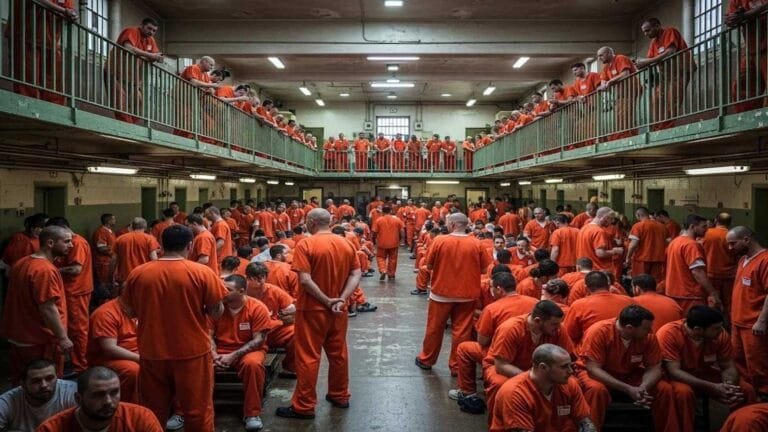
Brussels, Belgium – Several European countries are facing a growing crisis due to prison overcrowding and rising inmate numbers. This situation has prompted some governments to seek unconventional solutions, including leasing existing prison facilities or utilizing detention centers outside their borders. These measures aim to alleviate pressure on domestic prisons. These initiatives come amidst increasing prison populations in several European countries. Simultaneously, prison capacity is limited, and the construction of new correctional facilities is proving costly. Consequently, the idea of leasing existing facilities has become a subject of discussion within some political circles.
Experiences vary from country to country. However, a common thread is the search for additional space to accommodate prisoners. This is done instead of resorting to building new prisons, which requires years of planning and implementation and enormous financial costs. Moreover, the idea of ”prisons for hire” is highly controversial, particularly regarding legal responsibility for prisoners. Furthermore, questions arise about the level of oversight in detention facilities and the extent to which living conditions and care comply with European human rights standards.
Proponents of these solutions argue that they could serve as a temporary measure to alleviate pressure on correctional facilities, particularly when some prisons reach occupancy rates exceeding their capacity. Critics, however, warn that transferring prisoners or placing them in facilities outside their home regions could create new problems related to family visits, rehabilitation, and legal proceedings. The European prison crisis is not limited to a lack of space. Correctional systems face other challenges, including staff shortages and rising care costs. They also need programs to rehabilitate prisoners and reduce recidivism rates. In parallel, some governments are exploring alternatives to reduce incarceration numbers, such as alternative punishments, electronic monitoring, and parole. Rehabilitation programs, however, remain a higher priority, especially for less serious offenses.
Experts believe that a sustainable solution to the prison crisis lies not simply in increasing the number of cells. Rather, it requires a complete overhaul of the criminal justice system. This would ensure a balance between enforcing sentences, protecting society, and reintegrating offenders after their release. The “prisons for hire” crisis reveals a broader problem facing Europe. Some governments are now being called upon to treat prisons as part of public infrastructure—an infrastructure that requires long-term investment, not merely facilities that can be expanded as the number of inmates increases. As pressure on correctional institutions continues to mount, the question remains: Will rented prisons or off-site facilities become a temporary solution to overcrowding, or will they mark the beginning of a new model for European prison management?