Beijing, China – China has announced its complete rejection of construction activities carried out by the Philippines on a number of disputed islands and reefs in the South China Sea, asserting that these areas fall under Chinese sovereignty and describing the Philippine presence there as an “illegal occupation.”
The Chinese Foreign Ministry affirmed that Beijing opposes any steps taken by Manila to expand facilities or construct infrastructure within the disputed maritime areas. It considered such actions likely to increase tensions in the region and threaten regional stability.
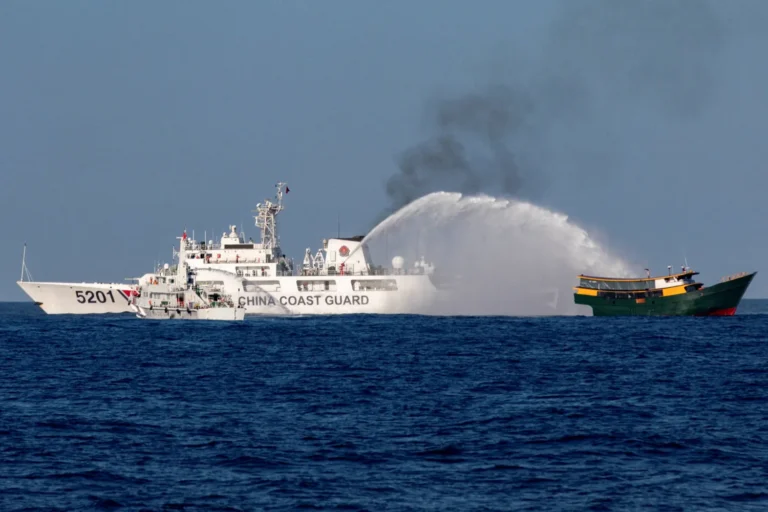
China stressed that it will continue to take what it called “necessary measures” to protect its sovereignty and maritime interests, at a time when the region has witnessed a recurring escalation in maritime confrontations between Chinese and Philippine vessels in recent months.
The South China Sea issue is one of the most sensitive geopolitical files in Asia. The territorial claims of several countries, including China, the Philippines, Vietnam, Malaysia, and Brunei, overlap. This is due to the region’s significant strategic and economic importance, through which a huge percentage of global trade passes.
Beijing accuses the United States and its allies of fueling tensions by supporting the Philippine position and increasing their military presence in the region. Manila, meanwhile, maintains that it is acting to protect its maritime rights in accordance with international law and previous international arbitration rulings.
Observers believe the recent escalation reflects the ongoing struggle for influence in the Indo-Pacific region, particularly given the growing military alliances and security cooperation between the Philippines and Washington in recent times.
Experts have also warned that continued maritime friction could lead to unforeseen confrontations. This is especially concerning given the increasing military patrols and the sensitivity of movements near vital shipping lanes.
Regional and international actors continue to call for restraint and diplomatic dialogue, fearing that the recurring maritime disputes could escalate into a wider crisis threatening the security and stability of the entire region.