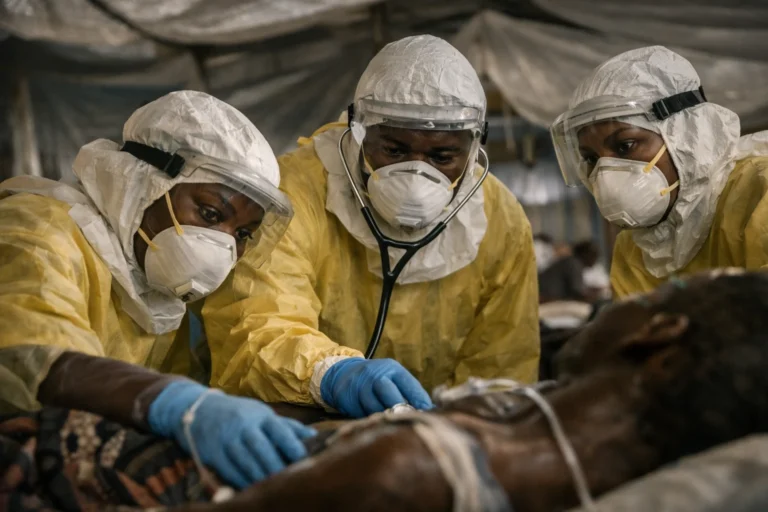
Kinshasa, Congo – Health authorities in the Democratic Republic of Congo have announced 105 deaths and 393 infections from the Bundibugyo strain of the Ebola virus. This development has raised concerns within the international medical community due to the rapid spread of the infection and the difficulty in containing the disease in some remote areas.
The Congolese Ministry of Health confirmed that medical teams are continuing isolation and contact tracing operations in several affected provinces. The ministry noted that the Bundibugyo strain is a rare type of Ebola virus. It also explained that this strain has previously caused limited outbreaks in Africa in recent years.
Authorities explained that most infections were recorded in areas with weak healthcare infrastructure and a lack of medical services. This further complicates efforts to control the virus, especially given the difficulty of accessing some villages and border regions.
These recent developments have prompted the World Health Organization to intensify its coordination with the Congolese government to support testing and treatment campaigns and provide medical supplies. In addition, community awareness programs have been strengthened to prevent the spread of infection among the population.
Health experts fear that cross-border movement could lead to the transmission of infections to neighboring countries, particularly given the continued trade and population movement in some African regions. For this reason, these developments have led several countries to raise their health alert levels at airports and border crossings.
Experts have noted that the Bundibugyo strain differs somewhat from other Ebola virus strains in terms of transmission rates and response to treatment. However, its danger remains high given limited healthcare resources and the difficulty of early detection of infected cases.
Health authorities are continuing awareness campaigns on prevention methods. They have also urged citizens to immediately report any suspected symptoms. Meanwhile, concerns are growing that the current outbreak could escalate into a wider health crisis if infections continue to rise in the coming period.