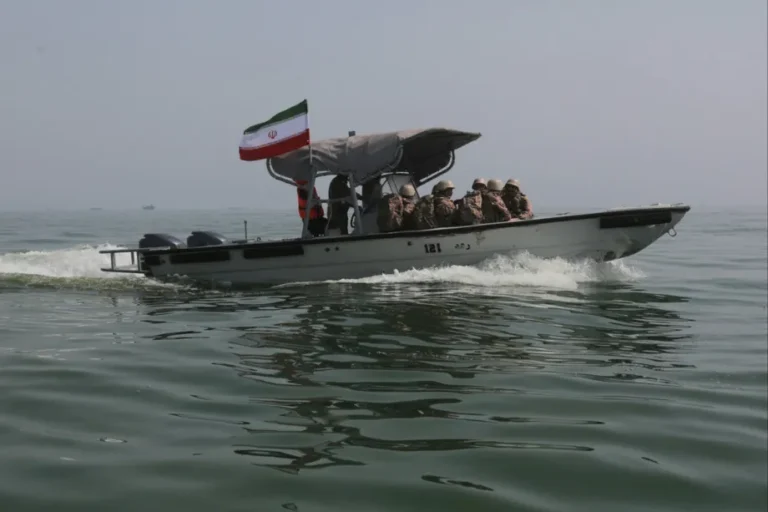
Military command centers confirmed the operational activation of advanced air defense batteries and early-warning radar arrays on the strategically positioned Qeshm Island at the entrance of the Arabian Gulf. This focus on Securing maritime corridors in Iran forms part of a precautionary protocol aimed at amplifying the combat readiness of armed forces in a highly volatile geopolitical zone. The deployment includes medium and long-range surface-to-air missile units capable of intercepting potential aerial targets, establishing a defensive perimeter over the Strait of Hormuz, which facilitates nearly one-fifth of global petroleum consumption daily.
Monitoring Foreign Naval Deployments and Asserting Sovereignty Over Crucial Waterways
This tactical escalation correlates directly with heightened movements of international warships and aircraft carriers navigating adjacent international waters. The Iranian Air Defense Command stated that activating these installations falls strictly within routine defensive exercises designed to protect coastal oil refineries and liquefied natural gas facilities from preemptive strikes. Qeshm Island functions as a critical geographic stronghold, granting naval forces the ability to accurately monitor international shipping lanes and track unmanned aerial vehicles (UAVs) transitioning through the channel.
Tehran utilizes these hardware reinforcements to project a political and military stance emphasizing its capacity to govern Gulf security independently of foreign coalitions. Consequently, international maritime insurance firms have begun re-evaluating risk matrices for ultra-large crude carriers (ULCCs). This adjustment has sparked high-level security assessments among global economic planners seeking to insulate international commodity boards from sudden, destabilizing energy price spikes.
Global Navigation Safety Anxieties and Regional De-escalation Initiatives
Conversely, the United States and its Western allies expressed concern regarding the continuous militarization of free-transit international waterways in the Middle East. Global maritime agencies warn that any systemic error in radar calibration or missile positioning could inadvertently trigger an all-out armed conflict that destabilizes transcontinental trade. Regional diplomatic bodies are urging the ratification of non-aggression treaties to permanently guarantee the immunity of civilian merchant ships crossing the strait.
Tehran maintains that these hardware updates remain strictly defensive, carrying no hostile intent toward adjacent coastal sovereign states. The current geopolitical landscape mandates the activation of direct communication hotlines between regional powers to share cross-border military data and mitigate intelligence miscalculations. Monitoring the mechanics of securing maritime corridors in Iran persists as a paramount metric for forecasting economic and security equilibrium across the Middle East in 2026.