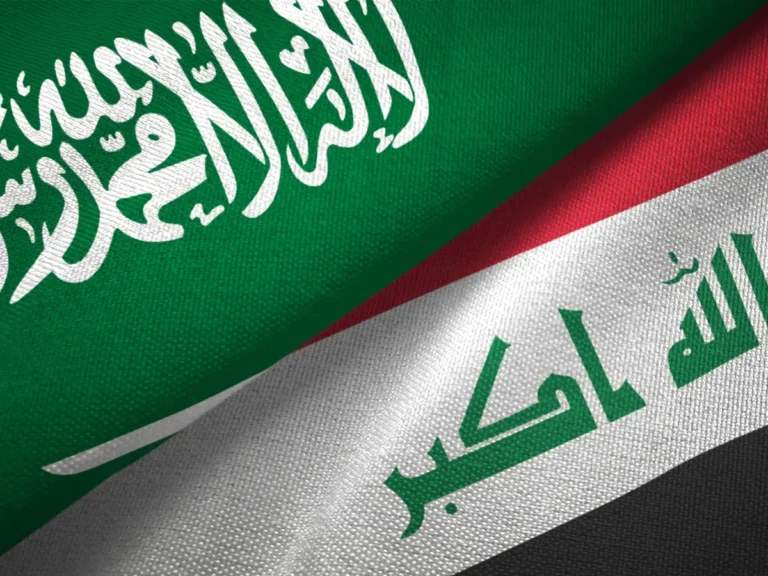
The Iraqi government has initiated urgent legal and security procedures to investigate the recent hostile strikes targeting vital infrastructure inside the Kingdom of Saudi Arabia. This definitive Iraq regional political stance emerges at a critical juncture to signal absolute rejection of threats facing the stability of neighboring states or the exploitation of Iraqi territories as launching zones for military offensives. Leadership bodies in Baghdad directed intelligence units to compile radar data and identify factions implicated in these strikes, aiming to eliminate repercussions that could dismantle ongoing diplomatic de-escalation efforts across the Arabian Gulf.
Forming Joint Investigative Committees and Suppressing Cross-Border Smuggling Networks
The Iraqi Ministry of Defense, collaborating with the Joint Operations Command, established specialized technical committees to review the flight trajectories of unmanned aerial vehicles (UAVs) and ballistic hardware detected by regional surveillance systems. These inquiries aim to verify that Iraqi airspace and borderlines were not violated to execute these hostile operations. Concurrently, state military units are amplifying deployments across western and southern desert sectors to neutralize the movements of unlawful armed militias and dismantle illicit weapon smuggling networks seeking to disrupt expanding bilateral ties between Baghdad and Riyadh.
Political leaders in Baghdad emphasize that Iraqi national security is intrinsically tied to the stability of the Arabian Peninsula. Recent economic developments and bilateral trade expansions through the Arar border crossing have reinforced strategic alliances between both nations, rendering any assault on Saudi installations a direct threat to Iraq’s vital economic interests. Through these decisive steps, Iraq aims to consolidate its role as a stabilizing force and a diplomatic mediator for regional dispute resolution, rather than a geopolitical arena for proxy conflicts among major powers.
Demands for Transnational Security Frameworks and Mitigating Armed Escallation
In response to the crisis, the Iraqi Ministry of Foreign Affairs urged neighboring sovereign states and international partners to prioritize diplomatic dialogue while avoiding reactionary military measures that escalate regional friction. Baghdad is discussing with the Arab League Secretariat the activation of mutual security protocols to combat cross-border terrorism and shield energy transit corridors and oil installations. Policy analysts warn that further structural instability will severely impact global energy markets and domestic post-war reconstruction blueprints.
The Iraqi administration maintains that it will not tolerate any entity attempting to infringe upon its state sovereignty or embroil the nation in armed regional disputes. The current climate necessitates high-level intelligence sharing with Saudi security networks to exchange real-time data and secure shared border perimeters running through expansive desert terrains. Tracking the developments of this Iraq regional political stance remains an essential metric for calculating the trajectory of political and security stability across the modern Middle East.