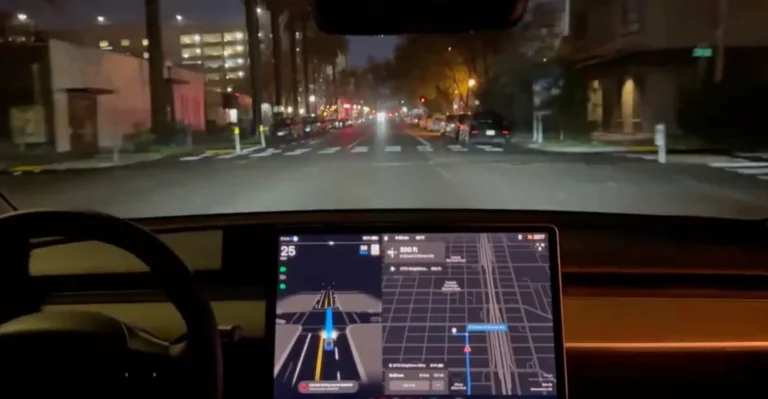
Tesla has deployed a foundational software package designed to fundamentally transform the operational performance of its electric vehicles on public roads. The introduction of these modern Tesla autonomous driving updates shifts automotive industry competition away from mechanical horsepower toward advanced software engineering and generative AI models. This over-the-air (OTA) package leverages an upgraded neural network that processes real-time visual data captured by eight surrounding cameras. This upgrade significantly enhances the Full Self-Driving (FSD) system’s capacity to execute critical maneuvers while navigating congested roundabouts and unpredictable pedestrian movements in metropolitan areas.
Real-World Driving Data Analysis and Eliminating Physical Maintenance Center Visits
The vehicles derive their advanced capabilities from scanning millions of miles driven daily by Tesla’s global fleet. Advanced algorithms analyze human driving errors and volatile weather dynamics to predict the behavior of adjacent motorists with greater precision than legacy builds. These installations reach consumers directly via internet connectivity, eliminating the need for factory recalls or physical service center appointments. This code-driven methodology effectively turns modern vehicles into mobile digital devices that organically improve over time, lowering traffic accident rates while elevating safety profiles on high-speed freeways.
The automotive firm directed massive capital investments into expanding its Dojo supercomputing clusters, which train the vehicle’s computer vision frameworks. This localized computing power successfully lowered emergency braking latency to fractions of a second. The broader smart transit sector utilizes these technological milestones to optimize the operational cost structures of upcoming robotaxi fleets, prompting rival technology enterprises to accelerate their logistics research to keep pace with the American manufacturer.
Regulatory Hurdles and Public Safety Scrutiny From Transport Authorities
Despite these technological leaps, Tesla faces intense scrutiny from the National Highway Traffic Safety Administration (NHTSA) in the United States and equivalent European transport boards. Regulators demand the integration of stricter driver-monitoring safeguards to guarantee human engagement and immediate manual override capability during algorithmic anomalies. Previous collisions linked to system mismanagement have sparked complex legal debates regarding liability allocation between the manufacturer and the vehicle owner. This regulatory tension accelerates the need for unified international frameworks defining autonomous driving tiers.
Simultaneously, competing automotive manufacturers in China and Europe are developing autonomous systems reliant on LiDAR sensors to challenge Tesla’s vision-only approach. Market analysts project that future market dominance will not be determined solely by unit sales, but by the capacity to maintain a secure, exploit-free software ecosystem. Tracking the longitudinal outcomes of these Tesla autonomous driving updates remains the benchmark portfolio defining the trajectory of commercial and private transportation networks for this decade.