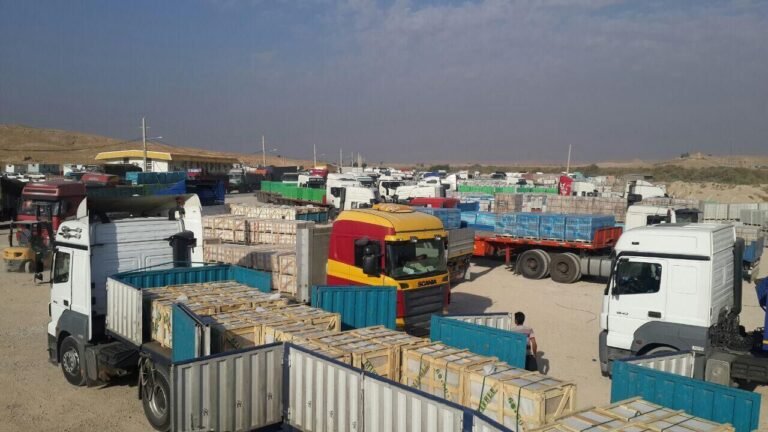
Basra, Iraq – Local authorities in Basra province announced a complete halt to trade and passenger traffic at the Shalamcheh border crossing. This followed a direct airstrike on the Iranian side of the crossing on Saturday morning.
These developments further complicate the security situation along the Iraqi-Iranian border, amidst an unprecedented military escalation in the region.
Targeting details and timing of the attack
The deputy head of the security and law enforcement office in Khuzestan province (Ahvaz) confirmed that at 11:00 AM on Saturday, April 4, 2026, the Shalamcheh border crossing near Khorramshahr (Mohammareh) was targeted by precision strikes, rendering the border facility inoperable. This attack coincided with field reports of similar explosions at the Mehran border crossing. This suggests a coordinated air campaign targeting strategic land crossings between Iran and Iraq.
The Popular Mobilization Forces cut off the road
These airstrikes come at a time when observers and citizens alike have noted the entry of large reinforcements of Popular Mobilization Forces (PMF) militias from Iraq into Iranian territory with official approval from Tehran.
Military analysts believe that targeting the Shalamcheh and Mehran border crossings is primarily aimed at severing military supply lines. It also seeks to prevent the influx of pro-Iranian militias, which actively participated in suppressing the protests and the Iranian national revolution last January.
Economic and security repercussions
The Shalamcheh border crossing is a vital economic artery for trade between the two countries. Its closure represents a significant blow to supply chains in southern Iraq and western Iran. The airstrikes have led to a state of security confusion on both sides of the border, with swarms of drones observed in the skies above the area. A heightened security alert has also been observed among Iraqi forces to secure the border strip.
This escalation places the border crossings at the heart of the regional conflict. Therefore, it threatens to transform populated border areas into direct confrontation zones, especially given the international community’s insistence on neutralizing Iran’s cross-border military proxies.