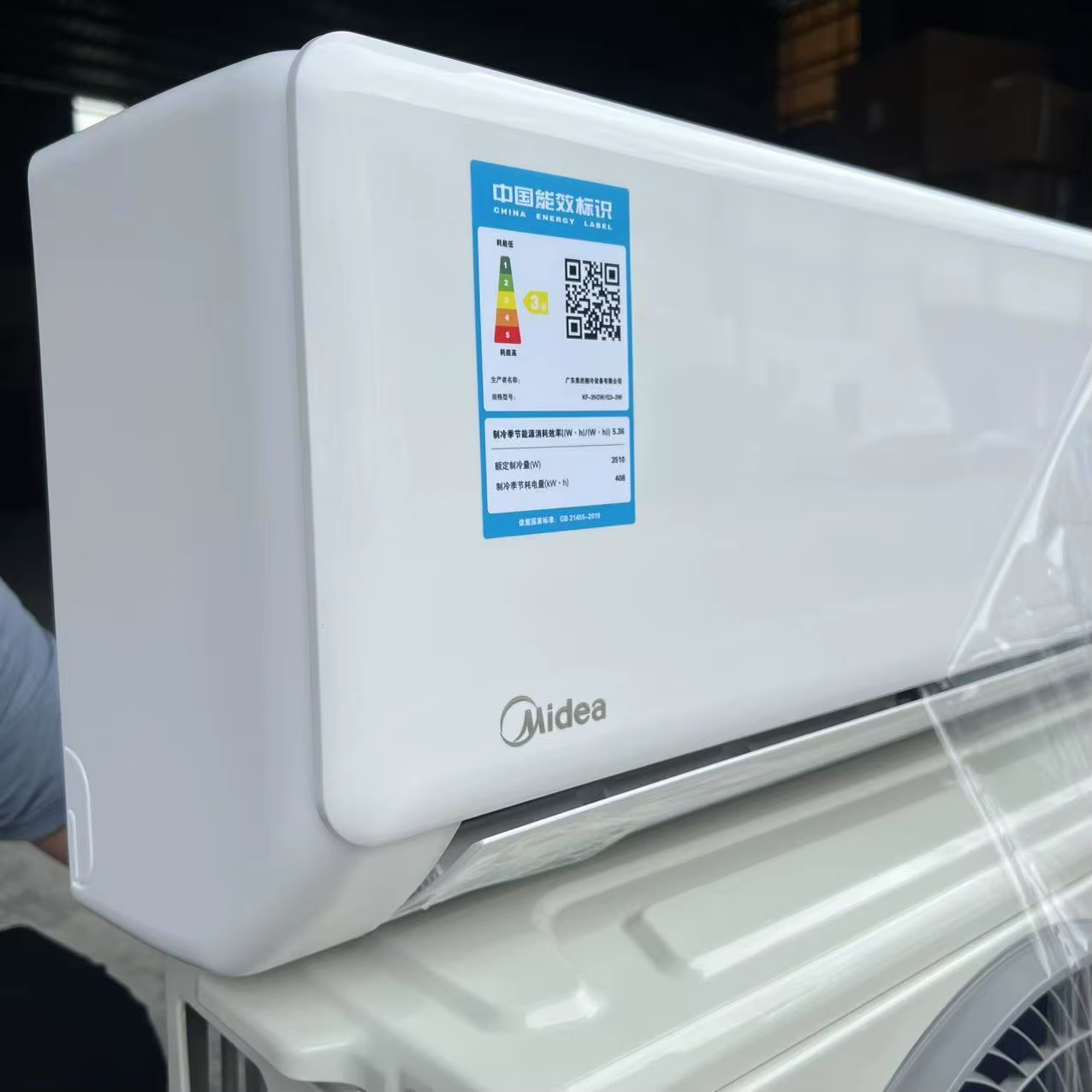
Europe – The record-breaking heatwave that swept across the European continent during the last weeks of June led to significant changes in the behavior of European consumers. This heatwave prompted them to seek immediate solutions to cope with the unprecedented indoor temperatures. In this harsh climate, portable air conditioners emerged as a top choice for many. As a result, these devices became a major hit in the home appliance sector. This surge in demand also boosted the profits of major Chinese manufacturers.
Exceptional demand boosts profits for Chinese giants
According to Bloomberg reports, leading Chinese companies such as Midea Group, Haier Smart Home, and Gree Electric Appliances have capitalized on this increased demand. These Chinese-made air conditioners are characterized by their near-instant installation and lower cost compared to traditional split-system air conditioners. These traditional units are widely available in the US and Asian markets.
In this context, Jeff Chang, an analyst at Morningstar, expects strong demand for window air conditioners to drive year-on-year export growth for Chinese manufacturers during the summer months. He also anticipates this will translate into a significant increase in revenue during the second and third quarters of 2026.
For its part, Citigroup estimates that Midea will achieve over 20% year-on-year growth in air conditioner sales in Europe during the second quarter. The company has anticipated this demand by building up a strategic inventory of portable units that is two to three times larger than last year’s. Haier Smart Home is also expected to see double-digit growth in the same sector and is strengthening its presence in the region.
Structural challenges and pressures on margins
Despite this external recovery, Bloomberg Intelligence analyst Elaine Lai is cautious about the long-term outlook. She asserts that this improvement “will likely not be enough to offset weak sales in the Chinese domestic market,” which remains the primary revenue driver for these companies.
These companies face a complex set of challenges, including continued weak Chinese consumer spending, declining government support, and rising commodity costs. Lai adds that the sharp rise in prices of vital raw materials such as aluminum and copper is putting increasing pressure on gross profit margins. For this reason, it may limit the net gains from the European boom.
The future of air conditioning in Europe
Data from the International Energy Agency indicates that only about one-fifth of European households own air conditioners, presenting significant opportunities for manufacturers. This is especially true given the ongoing regulatory and political debates surrounding the expansion of wall-mounted air conditioner installations. With climate change and global warming continuing, analysts believe that the competitive advantage of Chinese companies—namely, ease of use and lower costs—may solidify a permanent structural trend in the European market. Consequently, they view this season as just the beginning of a new phase in energy consumption and cooling in the region.