- Bahia responds: Donations are designated for Egyptian women
- Sudanese women in “Bahia”… the story predates the partnership
- The patient’s presence does not prove the source of funding.
- 900 million pounds… Why does the financial question become important?
- “Economic treatment”… the most important aspect of the issue
- Where are the documents?
- Five documents that could settle the debate
- Who paid the treatment bill?
Cairo, Egypt – The story began with an announcement of a collaboration between the medical office of the Sudanese Embassy in Cairo and the Baheya Foundation. This collaboration aimed to facilitate access to breast cancer screening and treatment for Sudanese women in Egypt. However, the announcement quickly sparked widespread controversy on social media after accusations surfaced that donations collected by the foundation from Egyptians were being used to treat Sudanese women.
Bahia responds: Donations are designated for Egyptian women
Baheya responded to these accusations with a statement affirming that donations from Egyptian individuals and institutions are designated for the treatment of indigent Egyptian women. Furthermore, it stated that non-Egyptian women receive treatment through its affordable treatment program or via cooperation agreements with organizations and embassies that cover the costs. However, this response raises a more fundamental question than the ongoing debate. Who actually pays for the treatment of Sudanese women at Baheya?
Sudanese women in “Bahia”… the story predates the partnership
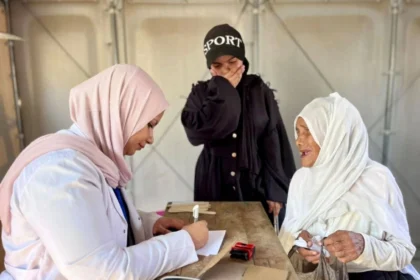
Research into the foundation’s archives reveals that receiving Sudanese patients is not a new practice. For example, Baheya had previously published the story of a Sudanese patient who received treatment at the foundation before the current announcement of the collaboration with the Sudanese embassy. This suggests that the question is not solely about the new partnership. Rather, it is also about how the treatment of non-Egyptian patients has been funded over the years.
The patient’s presence does not prove the source of funding.
The presence of a Sudanese patient at Baheya Hospital does not, in itself, prove that Egyptian donations covered her treatment costs. The institution has multiple funding sources, including individual donations, contributions from companies, banks, and other organizations. In addition, there are financial services and contracts. Therefore, linking the presence of Sudanese patients to donations requires financial evidence. Relying solely on photos or social media posts is insufficient.
900 million pounds… Why does the financial question become important?
The importance of scrutinizing funding sources has increased following recent statements by the Chairman of the Board of Trustees of Baheya Foundation. He indicated that the foundation’s direct expenditures will reach approximately 900 million Egyptian pounds by 2025. This is a significant increase from the 80-100 million Egyptian pounds in annual expenditures in 2015. Moreover, the statements suggest that funding comes from multiple sources, including institutions, companies, corporate social responsibility programs, and individuals. With this level of financial activity, the question of how to separate the sources of funds from their expenditures becomes increasingly important to the public.
“Economic treatment”… the most important aspect of the issue
Herein lies the most crucial aspect of the investigation: Is there a clear accounting separation between donations allocated for free treatment and revenues from subsidized treatment and funds received by the institution from contracting parties? If Sudanese authorities, the embassy, or another entity bears the cost of treating Sudanese patients, there should be contracts, invoices, or financial claims detailing the value of the services and the entity that paid for them. However, if some services are provided free of charge, the question remains: Who bears the cost?
Where are the documents?
To date, no financial documentation has emerged from open-source sources that proves Egyptian donations intended for the treatment of indigent Egyptian women were used to treat Sudanese women. Furthermore, the foundation’s official statement, while important, does not provide the public with sufficient financial details to allow for independent tracing of the funds. The missing link remains the financial documentation.
Five documents that could settle the debate
The matter doesn’t require further debate on social media, but rather specific documents. Most importantly: the cooperation protocol with the Sudanese side, the value of the agreement, the number of cases it covers, the total cost of treatment, and the amount paid by the contracting parties. Furthermore, publishing the revenue and expenditure data for the Economic Treatment Department and the audited financial statements, along with a clear breakdown of cost centers and revenue sources, can resolve a significant portion of the controversy.
Who paid the treatment bill?
Available information confirms that Baheya treats Sudanese women and that there is institutional cooperation with the Sudanese side. The organization also states that non-Egyptian women receive treatment through subsidized programs or from other entities that cover the costs. However, it has not yet confirmed that donations from Egyptians were used to treat Sudanese women. Furthermore, the question of the source of funding for these cases remains. This is because the definitive answer is not provided by the circulated publication or the official statement. Instead, it is provided by the bank statement and financial documentation. The real questions that should guide the investigation are: Who paid? How much did they pay? Where were these funds recorded? And were they truly separate from the donations from Egyptians?