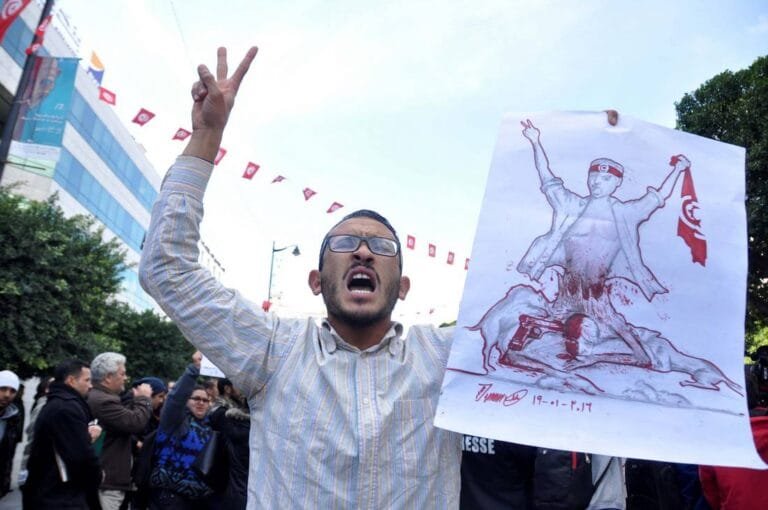
Tunis – Coordination committees and groups representing the unemployed in Tunisia are preparing to carry out a series of mass protests and sit-ins. Their aim is to pressure the executive branch to expedite the implementation of Law No. 18 of 2025. This law pertains to the exceptional recruitment of those who have been unemployed for more than ten years. These protests come amidst escalating tensions between graduate unions and security authorities. Moreover, the tension has intensified following decisions to restrict demonstrations. Meanwhile, official figures reveal a worsening unemployment crisis among university graduates.
Schedule of protest movements and licensing disputes
Various groups of unemployed individuals have announced central protests to be held on August 12th and 13th, 2026, in front of the Municipal Theater in the capital. This coincides with regional protests called for by major organizations including the “Union of Unemployed Graduates” and the “National Association of Unemployed University Graduates.” These protests will take place on the same day as International Women’s Day, August 13th.
However, these efforts were met with a controversial security decision. The two organizing bodies reported that the Bab Bhar security district verbally informed them of a ban on any form of demonstration planned for August 13th. Instead, it is limited to two hours the following morning (August 12th). As a result, this decision sparked widespread discontent among the protesters. They argued that linking the ban to official celebrations of International Women’s Day was completely at odds with the slogans of celebrating rights. Some questioned the point of celebrating women’s rights while thousands of unemployed women were denied their fundamental rights to work, dignity, and expression.
Statements condemning the restriction of freedoms and the violation of the constitution
In a joint statement issued by the Union of Degree Holders and the National Association of University Graduates, it was firmly asserted that “freedom of expression and assembly are not a favor granted by the authorities, nor a privilege to be bestowed and revoked at will. Rather, they are constitutional rights whose exercise cannot be subject to the timing dictated by the authorities.” The statement emphasized that the issue transcends merely setting a time for protests. Instead, it touches upon the very core of the unemployed’s right to voice their concerns and object to the ongoing procrastination in implementing a law passed months ago. Furthermore, the statement rejected fears of a repeat of the crisis surrounding previous legislation. The two organizations held the executive branch fully responsible for the continued obstruction of the law’s implementation. They also held it responsible for any consequences arising from this policy of delay. Additionally, they affirmed their unwavering commitment to proceeding with the announced demonstrations in the capital and across various regions without hesitation or wavering.
Background to the crisis: Law No. 18 and alarming unemployment figures
It is worth noting that Law No. 18 of 2025, published in the Official Gazette on December 22, 2025, stipulates exceptional provisions for the recruitment of university graduates who have been unemployed for more than ten years in the public sector. Despite the passage of several months since its enactment, those concerned are still awaiting its actual implementation. Moreover, the delay in drafting and issuing the necessary implementing decrees, as well as launching the digital platform for receiving and modifying applications, persists despite repeated official assurances of the state’s commitment to activating the law.
These developments on the ground come at a sensitive time. This coincides with the National Institute of Statistics’ release of employment and unemployment figures for the first quarter of 2026. These figures revealed a significant 1.7% increase in the unemployment rate among university graduates, reaching 24.2% compared to 22.5% in the last quarter of 2025. The statistics also revealed a wide gender gap, with unemployment rates of 14.2% for males compared to 32% for females. As a result, public anger has intensified, and calls for escalating protests demanding immediate employment have increased.