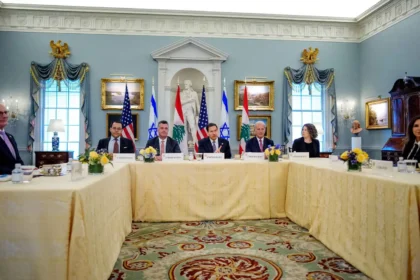
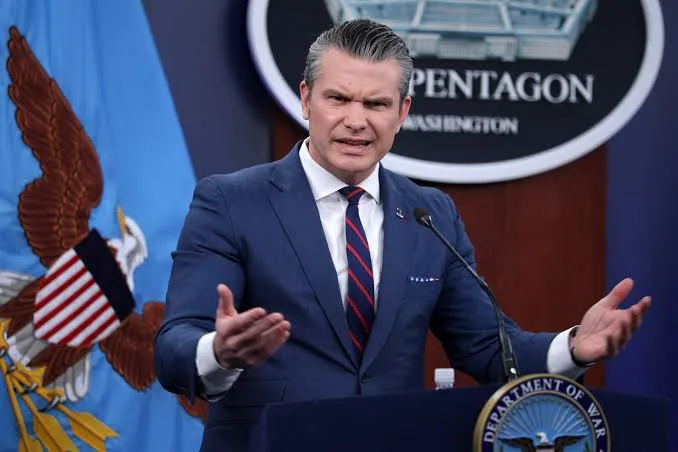
Washington, United States – US Defense Secretary Pete Hegseth confirmed that all options remain on the table for dealing with the Cuban capital, Havana, including resorting to military means.
During his meeting with journalists, held in conjunction with his participation in the Alliance of the Americas meeting to combat cartels and smuggling gangs in Panama, Hegseth explained that Washington is working to strengthen its close security cooperation with vital countries in the region such as Panama and Ecuador, particularly in the areas of security, combating gangs, and drug trafficking.
In the same context, the American official claimed that the United States is considered a “preferred partner” for Latin American countries, while criticizing the activities of rival international powers such as China, Russia and Iran, and pointing out that the actions of these countries in South America are “based on exploitation”.
A reference to Venezuela and a show of military force
Referring to the previous military operation carried out by the US military on January 3, which saw Venezuelan President Nicolas Maduro and his wife detained and taken to US territory, Hegseth claimed that Russian-made air defense systems had completely failed to protect the Venezuelan capital, Caracas, adding that Cuban security elements were also unable to provide the necessary protection for Maduro.
Along the same lines of attack, Higseth issued direct warnings to the Cuban administration, stressing that it must take the demands of US President Donald Trump seriously, and warning that the Cuban army “cannot keep up” with the might and military power of the United States.
The Secretary of Defense also touched on the great strategic importance of the Panama Canal to US national security, stressing: “We will not allow any country to use the Panama Canal – which is a major route for maritime trade between the Atlantic and Pacific Oceans – as an element of threat,” and affirming that the Panamanian administration is open to cooperation in order to prevent any malicious actors from interfering in the work of the canal.
Escalating tensions and a continued US embargo on Cuba
This verbal escalation comes amid ongoing political tensions; Cuban Foreign Minister Bruno Rodriguez stated on July 7 that the economic and political blockade imposed by the United States on Cuba constitutes an “act of war,” explaining that it “strangles and silently kills the Cuban people.”
In response, US Secretary of State Marco Rubio stated on July 23 that “change in Cuba will be difficult, but it must be done for a better future,” accusing officials in Havana of destroying the country by clinging to a collapsing ideology.
Recent US media reports indicate that the US Department of Defense (the Pentagon) has recently been quietly reviewing its strategic options toward Cuba, coinciding with ongoing reports of multiple regional and international tensions surrounding Washington’s foreign policy.