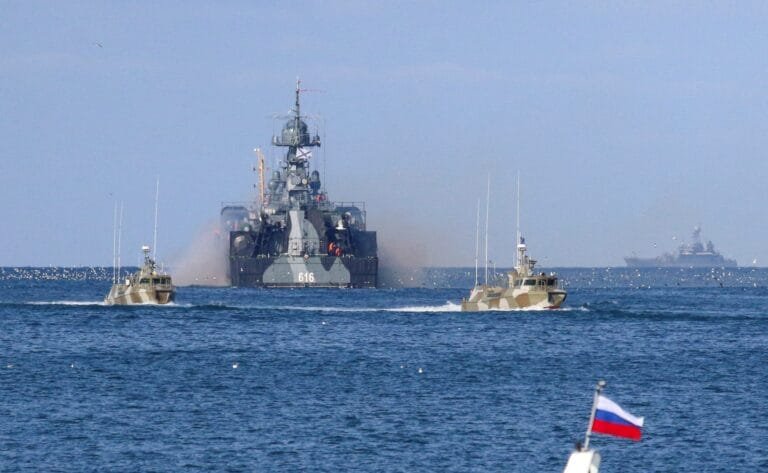
Kyiv, Ukraine – Shipping traffic through the Ukrainian Black Sea corridor has been halted for the first time since its launch in 2023. This comes amid escalating Russian attacks on commercial vessels and strategic ports. This rapid escalation has prompted global shipping companies to temporarily suspend their services. They cited increased security risks and casualties among ship crews as the reason.
Ukrainian officials confirmed that ports remain open and are continuing their administrative operations. They also indicated that the decision to suspend shipping was made independently by the shipping companies to ensure the safety of their crews. Ukrainian Agriculture Minister Taras Vysotsky stated that the government is working diligently to find alternative solutions. He added that they aim to resume shipping as soon as possible, according to France 24.
The suspension of maritime traffic followed a direct attack on a merchant vessel, which was set ablaze off the coast of Odessa last Wednesday. Ukrainian authorities rescued 16 sailors from the ship. This attack came after Kyiv announced on Monday that up to 10 sailors had been killed in an attack on another vessel. The Russian Defense Ministry, for its part, maintains that its military operations target only ships and ports used to support the Ukrainian war effort.
Diplomatic moves and mounting losses
In an urgent diplomatic move, Ukraine requested an emergency meeting of the UN Security Council on July 27 to investigate the recent attacks. It also accused Moscow of engaging in “terrorism” and endangering global food security. According to data from the General Point in the Odessa region, Russia targeted approximately 28 merchant vessels in the past month alone. This resulted in the deaths of 21 sailors and port workers, and injuries to others.
It is worth noting that Ukraine established the Safe Sea Corridor in August 2023 after the collapse of the UN-brokered grain export agreement with Turkey. Since then, more than 197 million tons of cargo have been shipped through Ukrainian ports. This included 117 million tons of grain, according to the Ukrainian Port Authority. In 2026 alone, the ports handled more than 42 million tons of cargo, including approximately 24 million tons of agricultural products. This represents an increase of nearly 20% compared to the same period last year.
Logistical alternatives and the repercussions of the crisis
Ukrainian President Volodymyr Zelensky warned of a possible escalation of Russian attacks, stating that Moscow is deliberately trying to isolate Ukraine from the Black Sea. This echoes previous statements by Russian President Vladimir Putin. In a practical development, the shipping giant Maersk announced it was rerouting its services to Romania instead of the Ukrainian port of Chornomorsk. This move, following a Russian attack on Chornomorsk, reflects growing investment and operational concerns among shipping companies.
Standard & Poor’s Global also reported that Ukrainian grain traders are considering rerouting their exports via the western land border or up the Danube River to the Romanian port of Constanta. However, low water levels and droughts across Europe are limiting the viability of this option. Furthermore, the sharp increase in transportation costs is placing a heavy burden on Ukrainian farmers.
On the other hand, Russia is also facing increasing pressure on maritime shipping following the intensification of Ukrainian counter-attacks, particularly in the Sea of Azov. Reports indicate that Moscow has imposed strict restrictions on navigation in the Sea of Azov and the Kerch Strait. Shipping companies have also been informed of new restrictions on nighttime sailings from the port of Novorossiysk. This port is a vital hub for Russian exports of grain, minerals, oil, and energy.
Before the war, Ukraine supplied about 6% of global wheat exports and more than 10% of corn exports. However, its production capacity declined by at least a third during the war years. This had a direct and severe impact on developing countries that rely heavily on Ukrainian grain to meet their basic food needs.