Giza, Egypt – Marwan ibn Muhammad, known in historical texts as “Marwan the Donkey,” was the last caliph of the Umayyad Caliphate.
His name is associated with the end of one of the largest Islamic states after a series of internal conflicts and revolts.
These conflicts and revolts paved the way for the establishment of the Abbasid Caliphate in 750 CE.
Marwan ibn Muhammad assumed the caliphate during a period of great turmoil.
He faced successive rebellions and political and tribal divisions.
Furthermore, the Abbasid movement was gaining influence, having successfully mobilized its supporters in Iraq and Khorasan.
The Abbasids capitalized on the weakness that had afflicted the Umayyad Caliphate in its final years.
Marwan ibn Muhammad’s escape journey
This period witnessed the Battle of the Zab, a major battle fought in northern Iraq,
which ended in the defeat of the Umayyad army by the Abbasid forces led by Abdullah ibn Ali.
Following this defeat, Marwan ibn Muhammad began a flight from city to city,
attempting to reorganize his forces and regain his influence.
The Umayyad caliph headed south, passing through the Levant and Palestine, before reaching Egypt.
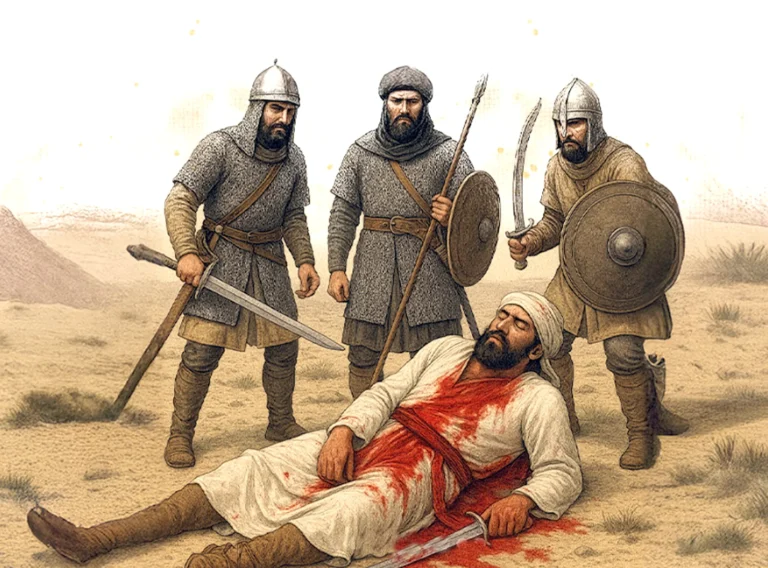
Meanwhile, the Abbasid forces continued their pursuit until they located him in the Busir region of Giza Governorate.
Historical sources indicate that Marwan ibn Muhammad was killed there in 750 CE,
marking the end of the Umayyad Caliphate in the eastern Islamic world after approximately ninety years.
The Abbasid Caliphate then began, ruling vast swathes of the Islamic world for centuries to come.
Key milestones in Islamic history
Several historians describe Marwan ibn Muhammad as a capable and experienced military leader.
However, the political challenges and internal divisions he faced, coupled with the growing support for the Abbasid movement,
made it difficult to maintain the cohesion of the Umayyad state in its final years.
The assassination of the last Umayyad caliph remains one of the most significant events in Islamic history.
It marked the end of a major political era and the beginning of a new one that reshaped the map of the Islamic world.
Its effects extended into the realms of politics, administration, and culture for centuries to come.