Washington, DC – In remarks that elicited widespread laughter and smiles from the audience, US President Donald Trump jokingly reiterated that he does not rule out the possibility of being re-elected for a third term. Speaking at a White House Correspondents’ Reception, Trump said, “As with my presidency, the second time’s always better. It’s always better. And the third time would be much better,” before adding, amid laughter from the audience and political observers, “I’m just kidding.”
“Trump 2028” hat and repeated references
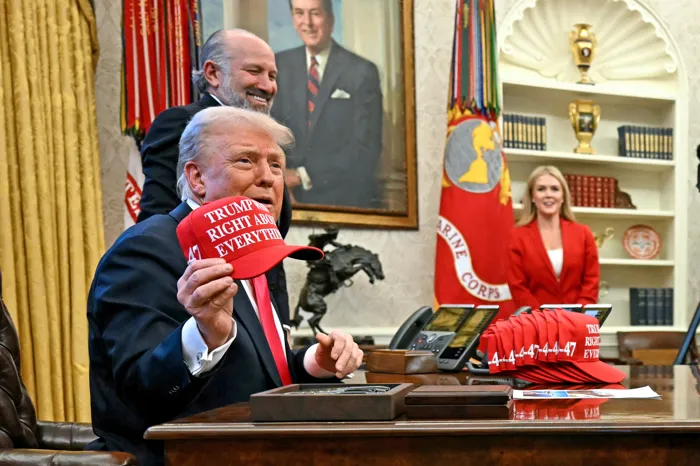
This was not the first time the US president had stirred up this controversy, as he had previously confirmed his intention – jokingly or hinting – to run for president in the US elections scheduled for 2028. During that occasion, he appeared wearing a red hat that explicitly said “Trump 2028”, which sparked a wave of laughter and comments, after which he clarified the matter again, confirming that he was not serious about those ambitions.
Constitutional framework and legal limits of the state
Despite the sarcastic and repetitive nature of these statements, legal and political circles in Washington point out that American law settles this matter definitively. According to the US Constitution, Trump’s current second term is officially scheduled to end in January 2029. The Twenty-Second Amendment to the US Constitution, formally ratified in 1951, explicitly limits the term of the US president to two terms only, legally prohibiting any president from serving a third term.
Steve Bannon’s past stances and political analyses
Despite strict constitutional prohibitions, the current US president has repeatedly hinted at the possibility of running for a third term on various occasions, fueling media discussions about the future of the country’s political system. Similarly, prominent political strategist and former advisor Steve Bannon also addressed this controversial possibility last fall, opening the door to ongoing speculation and analysis from political analysts regarding the limits of the US Constitution and its future interpretations within President Trump’s broad base of support.