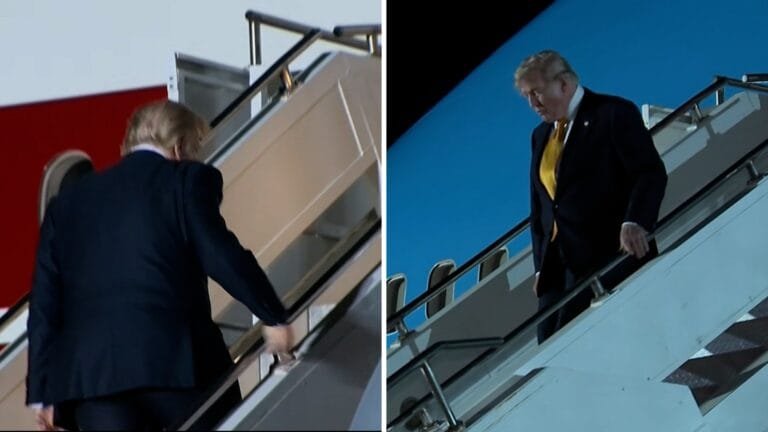
Washington, DC – The New York Times, citing several sources familiar with the matter, reported that US President Donald Trump was forced to change his aircraft after departing Turkey this month. This followed a credible threat from Iranian-backed forces targeting Trump and the presidential plane. According to the report, the serious security threat emerged while Trump was attending the NATO summit in Ankara. The president had arrived on a Boeing 747-8 donated by Qatar, an aircraft lacking the advanced defensive capabilities of the older Air Force One. Following the assessment of the threat, the Secret Service recommended a change of aircraft, and Trump subsequently departed Turkey using the older presidential plane as a precautionary measure.
Details of the threat and official reactions
Sources familiar with the matter explained that the information available to US officials did not indicate that Iranian-backed forces were specifically targeting the Qatari plane as an end in itself, but rather President Trump and any aircraft he might use for his travels. In its commentary on the report, The New York Times noted that the White House had not issued a direct official statement. However, a senior administration official, responding to press inquiries, referred to Trump’s previous public statements regarding Iranian attempts to assassinate him, expressing complete confidence in the security measures in place to protect the president and his entourage.
The same sources added that details of this threat were not widely distributed within the corridors of the US administration; only a limited number of officials were informed that the change of the aircraft came as a precautionary step resulting from general concerns related to Iran, and senior members of Congress were not informed of the specific nature of the threat.
Initial justifications and intelligence explanations
It is worth noting that President Trump initially claimed that changing the plane allowed American military personnel in Britain to see the new aircraft, denying that the decision was related to any security considerations, before press reports later revealed that the Secret Service had taken charge and recommended using the old aircraft to avoid risks.
The report indicated that the threat that led to the plane being changed was completely separate from other previous intelligence information attributed to Israel regarding Iranian efforts to assassinate Trump. Some American officials viewed this information with great skepticism, considering that it may have been an attempt to push the US President to escalate military attacks against Iran.
This incident coincided with the resumption of US military strikes against Iran while Trump was in Ankara, about a thousand miles from Tehran. During the summit, the US president stated that Iran was trying by all means to assassinate him, adding firmly, “They want to take out the leader of the United States, which is me… I am on all their lists,” and recalling that the assassination threats linked to Iran date back to his first term following the assassination of Iranian Quds Force commander Qassem Soleimani in a US strike.
The problem of the presidential fleet and the volatile security environment
For years, Trump criticized the two presidential aircraft used since 1990, arguing they were no longer suitable for official foreign travel. This coincided with ongoing concerns from military officials about their continued operation beyond their intended lifespan. Last year, Qatar announced its donation of a Boeing 747-8 for Trump’s use, while the president had previously stated his intention to move it to his personal presidential library after leaving office.
The US administration currently describes the new aircraft as a “temporary solution” while awaiting delivery of the new Boeing aircraft ordered by the US Air Force. White House spokeswoman Carolyn Leavitt confirmed that the Qatari aircraft will undergo further upgrades this fall, lasting approximately one month, during which time the president will continue to use the older presidential plane. In a related development, and amid escalating risks, Secret Service Director Sean Curran confirmed during a press briefing that the threat level facing the individuals protected by the agency is the highest it has been in its 24-year history. He added, in a cautionary tone, that the security environment has become “highly volatile,” encompassing potential risks from local officials in addition to federal and foreign threats.