
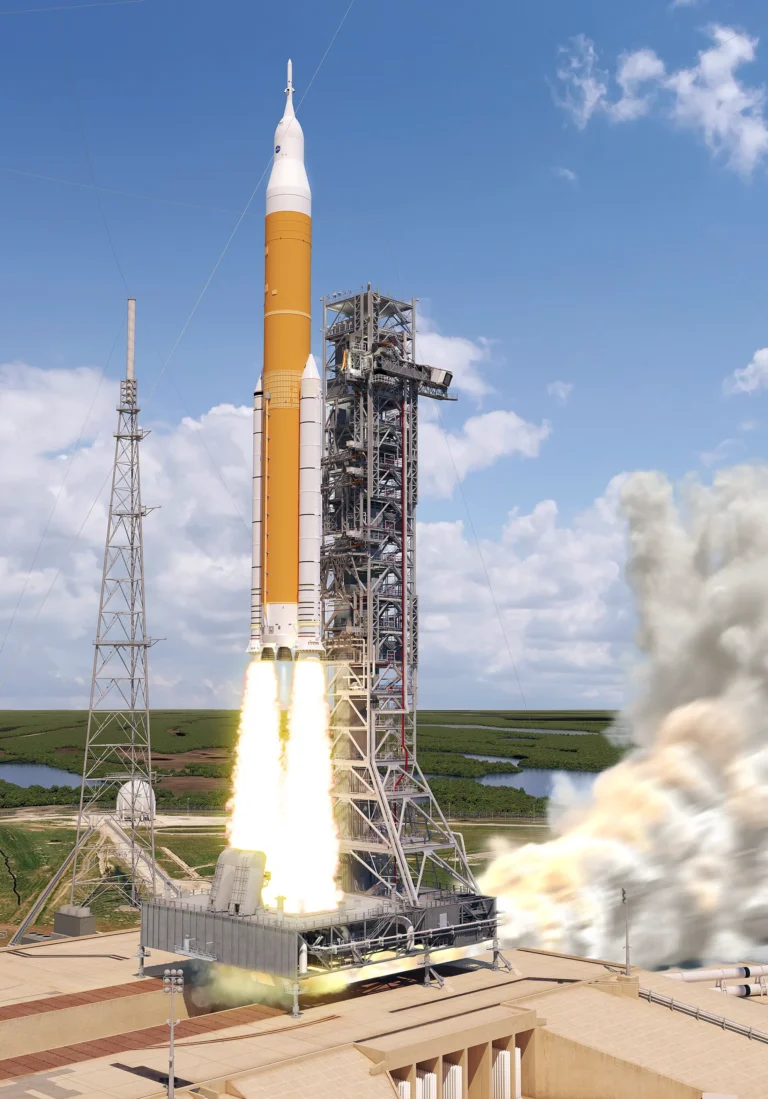
Washington, DC – The choice of landing site for NASA’s Artemis 4 mission is generating considerable debate within the scientific community.
Researchers believe that landing near the Moon’s south pole could represent a pivotal step in the future of space exploration, thanks to the region’s abundant natural resources and unprecedented scientific opportunities.
The Artemis program is NASA’s most significant project for returning humans to the lunar surface more than half a century after the Apollo missions.
It aims to establish a sustainable human presence, paving the way for future crewed missions to Mars.
The future of human settlement beyond Earth
The Moon’s south pole is of particular interest, as data from multiple space missions has revealed the presence of water ice within craters that never receive sunlight.
This discovery could revolutionize the future of human settlement beyond Earth, as the water could be used for drinking, oxygen production, and even rocket fuel manufacturing.
The region also features high peaks that receive more sunlight than other parts of the Moon,
making it a suitable location for generating the solar energy needed to power future equipment and bases.
Scientists believe that studying the rocks and soil in this region could reveal new information about the Moon’s history and evolution,
and perhaps even provide clues that will help us understand the early stages of the solar system’s formation billions of years ago.
Deep space exploration missions
But landing at the South Pole is not without its challenges. Its terrain is extremely rugged, with deep craters, steep slopes, and constant shadows that impede visibility and communications.
This necessitates navigation and landing technologies far more advanced than those used in the Apollo missions.
Therefore, NASA, in collaboration with its international partners, continues to carefully study a number of potential sites to ensure the best balance between safety and scientific return, while leveraging data collected by orbiters and modern robotic missions.
Space experts emphasize that a successful landing near the South Pole would not only be a scientific achievement but also a strategic step toward establishing permanent human bases on the Moon and transforming it into a key launchpad for deep space exploration missions in the coming decades.