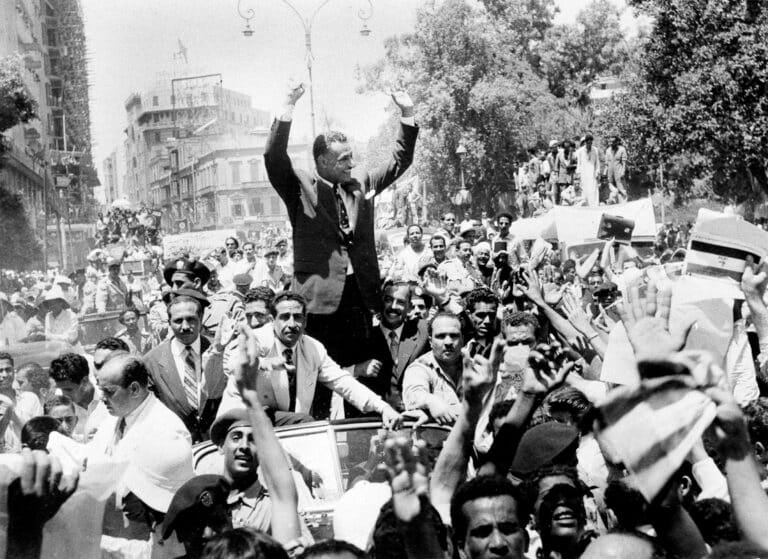
Cairo, Egypt – The July 23, 1952 Revolution not only changed the political landscape in Egypt but also left a profound mark on its cultural life.
It became a source of inspiration for novelists and poets who documented its events
and chronicled the social and economic transformations that followed.
As a result, the revolution became a powerful presence in modern Egyptian literature.
Many writers celebrated the revolution through novels and poems
that explored the dreams of social justice and national liberation.
They also addressed the issue of ending feudalism and building a modern state.
Others offered critical perspectives on the challenges the revolution faced in the years following its inception.
It embodied the spirit of the era and its hopes
The renowned Egyptian writer Naguib Mahfouz was among the most prominent figures
to address the transformations that Egyptian society underwent after the revolution.
His works reflected the social and political changes the country experienced.
Meanwhile, the writer Youssef El-Sebai presented novels that embodied the spirit and aspirations of the era.
Abdel Rahman El-Sharkawy tackled issues of justice and freedom in his literary and theatrical works.
In poetry, the name of the poet Salah Jaheen is inextricably linked to the July Revolution.
In his poems and patriotic songs, he expressed the Egyptians’ aspirations for building a new future.
Other poets also produced works that celebrated the national transformations and the spirit of independence and belonging.
Historical and cultural value
The revolution’s presence wasn’t limited to written literature; it extended to theater and cinema.
Dozens of artistic works drew inspiration from its events, figures, and societal impact.
The July Revolution became one of the most prominent historical
milestones in Egyptian creativity during the 20th century.
Literary critics believe that the diversity of literary perspectives
on the July Revolution reflects the dynamism of the Egyptian cultural scene.
It encompassed both support and criticism, as well as reinterpretations of the experience.
This imbued the works associated with it with a historical and cultural value
that transcends mere documentation of events.
Therefore, they remain a testament to a pivotal period in modern Egyptian history.