Brasilia, Brazil – A team of paleontologists announced the discovery of a rare snake fossil dating back approximately 85 million years.
Researchers described the find as shedding light on the early stages of reptile evolution
and providing new evidence about the diversity of snakes that lived during the Cretaceous period.
An important addition to the world fossil record
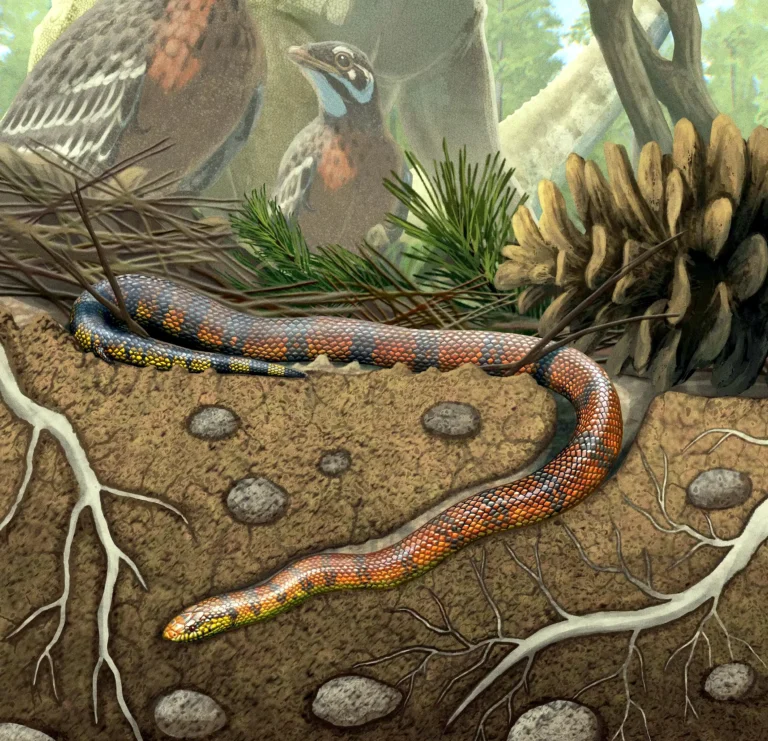
The fossil belongs to a species known as Tamitara mirim,
an ancient snake that lived in biodiverse environments millions of years ago,
when dinosaurs dominated the land.
Researchers explained that studying the skeletal remains revealed
distinctive anatomical features of this ancient species.
These features help in understanding how snakes evolved and spread across continents.
Furthermore, they shed light on the relationship between ancient and modern snakes.
The scientific team noted that the fossil represents an important addition to the global fossil record,
providing new information about biodiversity during the Cretaceous period.
It also helps in reconstructing the ecosystems that prevailed in that distant era.
Modern techniques used in fossil analysis
Scientists believe that such discoveries contribute to understanding the evolutionary path of reptiles.
They also reveal how reptiles adapted to climatic and environmental changes over millions of years,
as well as their role in illuminating the history of life on Earth.
Paleontologists confirm that modern techniques used in fossil analysis, such as 3D imaging and microscopy,
now allow for the extraction of precise information from ancient specimens.
This helps uncover more secrets of creatures that lived tens of millions of years ago
and enhances scientists’ understanding of the history of biological evolution on Earth.