London, UK – A recent scientific study has revealed that fingers may hold important clues that help scientists understand how the human brain has evolved over millions of years.
This discovery highlights the close relationship between the development of
motor skills and the growth of cognitive functions in humans.
Stimulating different areas within the brain
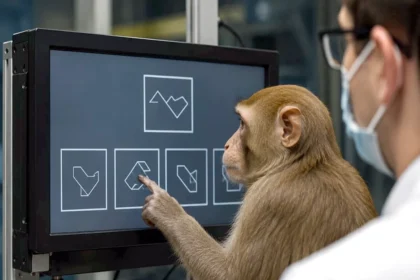
The researchers explained that the evolution of hand structure, particularly the fingers and thumb,
gave humans a greater ability to grasp tools precisely and execute complex movements.
This evolution contributed to stimulating various brain regions responsible for planning, coordination, and learning.
The study indicated that using the hand for toolmaking and daily activities was not simply a result of brain evolution.
Rather, it was a factor that, in turn, helped promote neurological development
and the enhancement of cognitive skills.
This reflects a reciprocal evolutionary relationship between the two.
New insights into the evolution of the nervous system
The research team relied on analyzing anatomical data and comparing modern humans
with their ancestors, in addition to studying hand characteristics in some primates.
The goal was to gain a deeper understanding of the stages of human evolution.
Scientists believe that the study’s findings may contribute to explaining how humans acquired
their unique abilities in abstract thought, innovation, and communication.
They also offer new insights into the evolution of the nervous system and motor functions throughout history.
The researchers emphasized that understanding the relationship between hand
and brain development is not limited to studying the past.
It may also help advance research related to neurological diseases and motor rehabilitation.
This opens new horizons for future medical and biological studies.