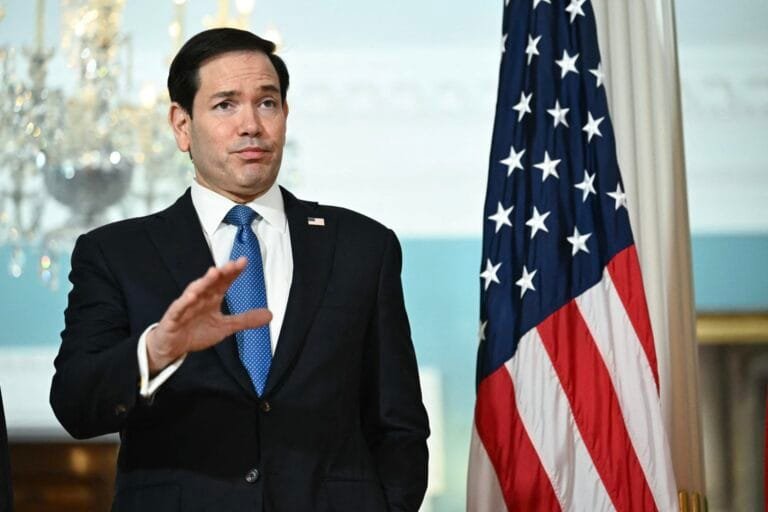
Washington, DC – In a significant political and diplomatic escalation, US Secretary of State Marco Rubio stated that Iran is not ready to make a deal. Despite this, Tehran is pleading with Washington to reach an agreement. Speaking at a press conference on the sidelines of the ASEAN summit on Thursday, Rubio added, “Iran is not ready to make a deal, and if the situation continues like this, they will pay a heavy price.” The US Secretary of State noted that “the price Iran will pay will increase every night until they come to their senses.” He also vowed that Tehran would pay a price for its continued attacks against US allies. In a related matter, he stated that Iran had drawn the Houthis into the conflict. He expressed hope that the Houthis would cease their attacks and de-escalate tensions after being deceived by Iran.
The US military completes a new round of intensive strikes.
On the ground, the US military announced Thursday that it had completed its latest round of strikes against Iran. These strikes, ordered by President Donald Trump, marked the twelfth consecutive night of such attacks. US Central Command stated that American forces struck Iranian military targets, including naval capabilities, missile and drone storage facilities, coastal surveillance sites, and air defense assets. The statement also noted that US forces have targeted dozens of Iranian military sites on land this month. This comes as the US continues to impose a naval blockade on Iran. The statement indicated that the latest strikes lasted for five consecutive hours.
Use of B-1 bombers and review of military escalation options
In a significant military development, the US military used a B-1 long-range bomber to strike targets belonging to Iran’s Islamic Revolutionary Guard Corps (IRGC) on Tuesday, according to a report by Axios. This marks the first time the US has used these bombers since the start of its current campaign of strikes twelve days ago. They were previously used in Operation Epic Wrath in March. As President Donald Trump considers various military options, the deployment of the B-1s is a clear indication of an escalation in the US military campaign. These bombers can carry up to 24 bombs weighing 900 kilograms each, or dozens of cruise missiles, and they fly at supersonic speeds.
Large military buildup and additional reinforcements in the area
These strikes coincide with the United States’ increased military presence in the Middle East. This includes additional troops, medical personnel, and advanced weaponry. According to flight tracking data and U.S. officials, special operations forces, fighter squadrons, and transport aircraft have been deployed to the region over the past week. Furthermore, more than 150 medical personnel have arrived at the Landstuhl Regional Medical Center in Germany to treat wounded soldiers.
The US military buildup comes in the wake of the killing of three American soldiers in an Iranian attack. Despite concerns about the war’s costs, which have exceeded $37 billion, the House of Representatives approved a $95 billion budget. This budget includes additional military funding. For its part, Tehran, through its Foreign Minister Abbas Araqchi, warned that “any aggression against Iran will require a strong and decisive response.” Meanwhile, the US Navy currently has 17 ships in the region, including two carrier strike groups, amid ongoing naval tensions.