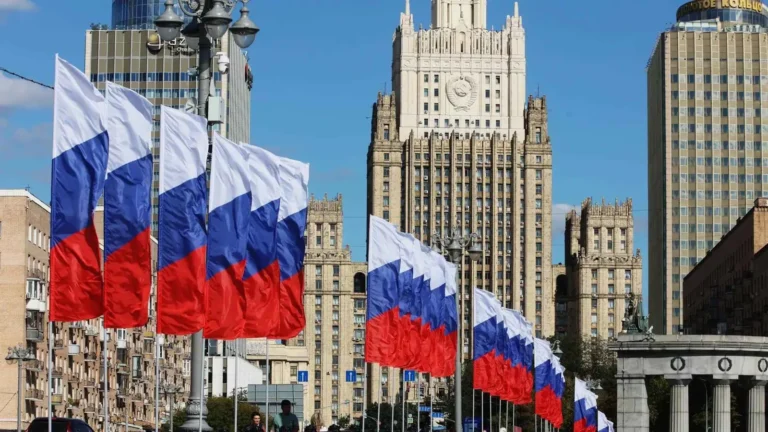
Moscow, Russia – A source in the Russian Foreign Ministry announced that the ministry has published an updated official document on its website entitled “The Concept of Ensuring Collective Security in the Gulf Region.”
The source explained that this step comes at a time when the Gulf region is still experiencing a severe crisis, stemming from what he described as “American-Israeli aggression against Iran.”
The source noted the urgent need, under these difficult circumstances, for collective political and diplomatic efforts to find lasting, mutually acceptable solutions. These efforts also aim to reduce regional tensions and create the necessary conditions for transforming the Gulf into an area of cooperation and prosperity.
Moscow believes that the formation of a new, sustainable framework for relations between states must be based on respect for the legitimate interests of all parties. Comprehensive and reliable collective security must also be guaranteed to protect the region from destructive external interference.
In its updated document, Russia proposes five fundamental principles for achieving security. These principles include a phased approach to establishing a comprehensive security system, beginning with addressing the most pressing issues. Foremost among these are ensuring freedom of navigation in the Strait of Hormuz and strict adherence to nuclear non-proliferation. Furthermore, it calls for a joint fight against international terrorism.
Moscow also urges regional states and external actors to develop and implement a set of collective confidence-building measures in the military sphere. These measures aim to ensure transparency and predictability in long-term military activities.
The Russian proposal includes binding provisions preventing countries in the region from allowing any third party to use their territory to launch attacks against neighboring states.
The Russian vision also includes the conclusion of specific arms control agreements, such as the establishment of demilitarized zones. It further includes preventing the accumulation of destabilizing conventional weapons and a balanced reduction of armed forces by all parties. Ultimately, this aims to transform the entire Middle East and North Africa into a zone free of weapons of mass destruction and their delivery systems.
On the maritime front, Moscow emphasizes the need to be guided by the provisions of the 1982 United Nations Convention on the Law of the Sea and customary law concerning innocent passage and safe transit. However, the utmost importance must be given to the safety of ships and their crews.