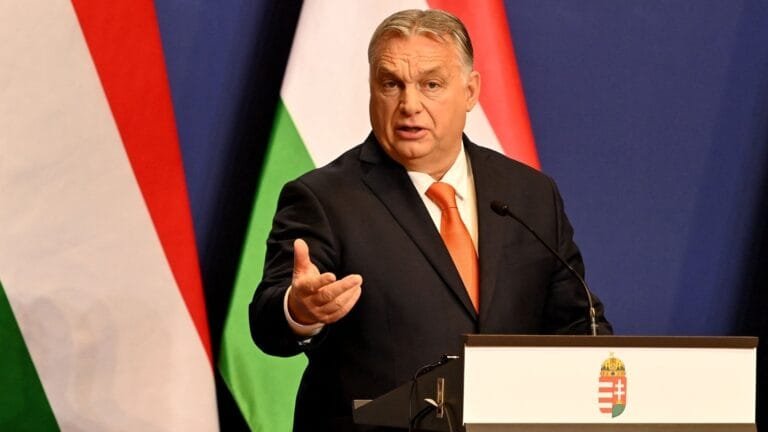
Budapest, Hungary – Political tensions are escalating in Hungary following reports that Prime Minister Viktor Orbán may resort to constitutional amendments that could curtail the powers of President Tamás Széliuk or rewrite certain articles governing the relationship between state institutions. This has raised concerns about the country entering a new constitutional crisis in the near future.
These developments come amid growing disagreements between government circles and some political forces over sensitive domestic and foreign policy issues. These issues include economic policies, relations with the European Union, and the rule of law. These matters have been a source of ongoing dispute between Budapest and Brussels in recent years.
Observers believe that any attempt to implement broad constitutional amendments could open the door to a sharp political confrontation between the government and the opposition. This is especially true if such steps are perceived as a means of redistributing power within state institutions or affecting the existing balance of power.
The circulating news has sparked mixed reactions within political and legal circles. Several experts have warned that introducing fundamental amendments to the constitution in a politically charged atmosphere could exacerbate polarization. They also believe it could affect institutional stability in the country. Meanwhile, government supporters insist that any potential amendments will be carried out within the established legal and constitutional frameworks.
The European Union is also closely monitoring developments, given the complex relationship between Hungary and EU institutions in recent years. It is worth noting that Budapest has previously faced European criticism regarding the independence of its institutions, oversight mechanisms, and legislation governing political life.
Analysts assert that the future of the crisis hinges on the nature of the proposed amendments and their ability to garner the necessary political and parliamentary support. It also depends on the reactions of the Hungarian public and various political forces to any changes that might affect the country’s constitutional framework.
While no final decisions have been made regarding these proposals, the Hungarian political landscape remains in a state of anticipation. This comes amid concerns that escalating disagreements could deepen the political divide and spark a broader debate about the future balance of power within the state.