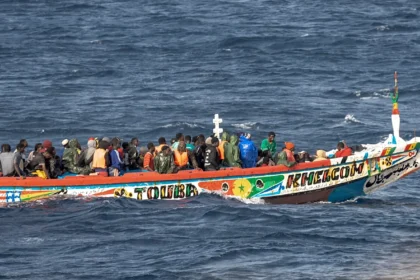
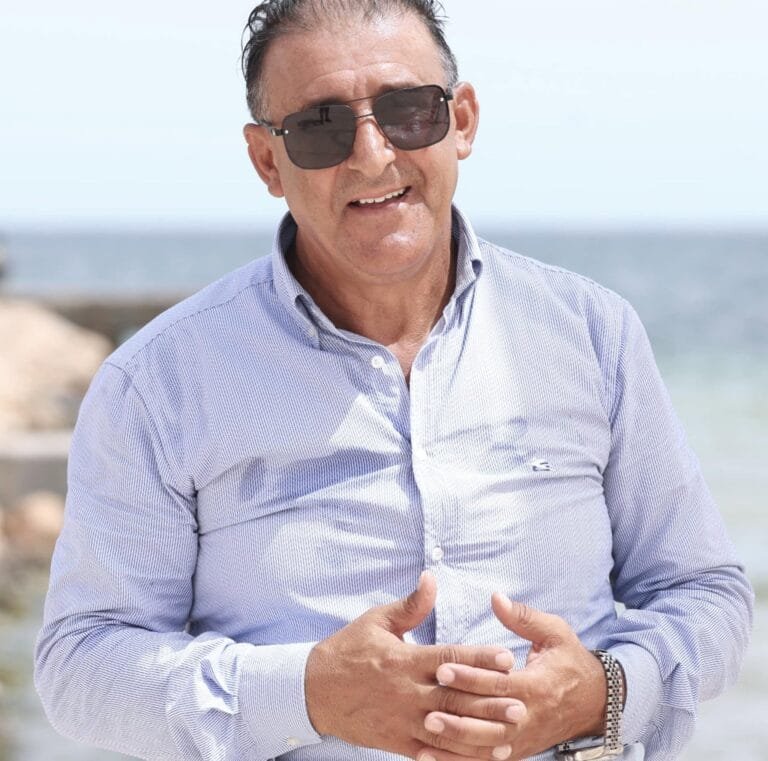
Tunis – The head of the Tunisian Observatory for Human Rights, Mustafa Abdel Kabir, announced that at least 13 Tunisians are missing after a boat carrying irregular migrants sank off the Tunisian coast. The incident occurred as they were attempting to reach the Italian coast. Abdel Kabir explained that rescue teams were only able to pull two survivors from the water, one of whom was in critical condition. He also noted that the ill-fated vessel had embarked on its perilous journey at dawn last Thursday.
Survivors’ testimonies and hours of terror amidst the waves
The survivors’ accounts paint a grim picture, with one of them recounting the terrifying moments to the rescue team aboard a local boat. He confirmed that they remained stranded and struggling for their lives in the open sea for hours after the boat suddenly capsized, amidst difficult and complex conditions that further hampered the search for the remaining missing persons.
Declining numbers of migrants and the role of European support
Although Tunisia was once a major departure point for migrants seeking to cross the Mediterranean to Europe, the number of departures from its shores has declined sharply over the past two years. This decrease is a result of Tunisian authorities intensifying their security campaigns and tightening controls on maritime borders. These measures were implemented with broad European support, including financial assistance and advanced surveillance equipment.
Widespread legal controversy surrounds the European-Tunisian agreements.
This incident cast a shadow over the ongoing human rights debate. In a joint statement issued by prominent international organizations such as Human Rights Watch and Amnesty International, along with dozens of other human rights groups, it was noted that the migration agreement between the European Union and Tunisia has contributed to the exacerbation of serious violations against migrants and asylum seekers. These organizations called on the European Union to suspend funding for border control activities involving Tunisian security forces. For its part, the Tunisian authorities have not issued an official comment on the human rights statement. However, they have repeatedly asserted that they bear the brunt of the migrant influx. President Kais Saied had previously stated that this influx has dimensions aimed at altering the country’s demographic composition.
The Mediterranean: A Continuous Death Trajectory for Asylum Seekers
The Mediterranean Sea remains one of the world’s most dangerous migration routes. Thousands of migrants from across Africa and the Middle East continue to risk their lives trying to reach Europe, often using overcrowded and unseaworthy boats, leaving the door open to the recurrence of such tragic human tragedies.