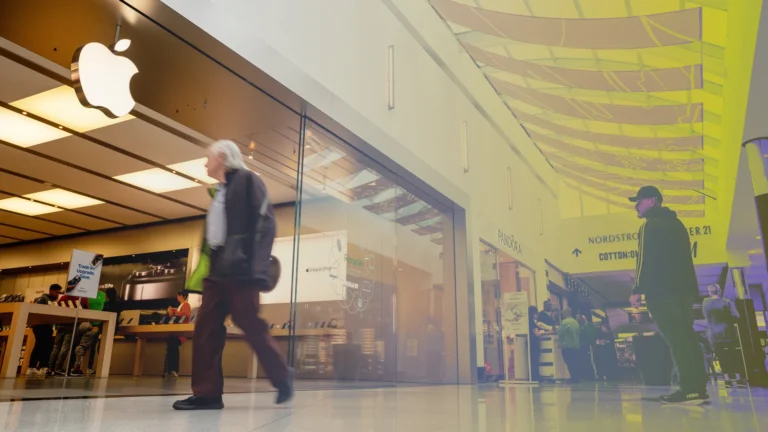
Washington – United States — American tech giant Apple is facing a fresh and escalating wave of intense political and regulatory pressures following an outbreak of sharp controversy within the US Congress over the decision to close its very first retail storefront in the United States whose employees had successfully organized into a labor union. This corporate maneuver has forcefully reopened the highly sensitive case file governing the volatile relations between Big Tech conglomerates and collective bargaining rights within the vital retail sector.
Labor Activism Puts Major Tech Firms Under Legislative Accountability
This rapid development unfolds at a time of mounting debate within American legislative and oversight circles regarding internal labor practices at elite technology firms. Lawmakers are structurally evaluating these multinational corporations’ compliance with benchmarks protecting the freedom of labor organization—especially following a sequence of organized worker movements and strikes that rolled through storefronts and service divisions of multiple leading firms over recent years.
According to media and press reports leaking from the corridors of Washington D.C., several prominent members of Congress have submitted formal, firmly worded inquiries demanding detailed and transparent clarifications from Apple’s executive leadership regarding the true operational motives behind shuttering the aforementioned store. Lawmakers are seeking to establish whether this abrupt closure was directly or indirectly linked to the branch’s growing union activities, or if it was driven by purely operational and commercial realities, amid expanding parliamentary calls to initiate sweeping federal investigations to guarantee that legally recognized worker rights are not being systematically violated.
Union Apprehensions Over Negative Precedents and Administrative Defenses
Concurrently, independent labor syndicates and union bodies central to the crisis asserted that closing this specific store triggers legitimate anxieties and deep apprehensions regarding the survival of nascent worker organizations within the contemporary technology sector. Union representatives pointed out that letting this corporate action pass unchecked could establish a highly dangerous administrative precedent, severely dampening ongoing and future efforts by workers at other branches to secure formal, legal union representation engineered to optimize daily working conditions, benefits, and baseline wages.
In response, Apple vigorously defends its position, maintaining that store closures, realignments, and corporate restructuring phases are consistently executed as part of routine, calculated operational strategies designed primarily to boost overall performance metrics and elevate consumer experiences. The company strongly asserts that these decisions bear no correlation or prior link to the union alignments or organizational tendencies of its workforce. However, this corporate rationale has failed to fully placate critics, driving the socio-political and media discourse into further escalation and polarization across the United States.
Industry analysts and labor market experts suggest this sensitive case vividly mirrors a deepening friction between Big Tech firms and legislative watchdogs in the United States, particularly as labor consciousness and grassroots mobilization continue to mature across retail and logistical service frameworks. Consequently, corporate managements find themselves under compounding pressures to strike an incredibly complex structural balance between sustaining high operational efficiency and profitability on one end, and genuinely respecting the mandated freedoms of their employees on the other.
Legal scholars note that Congress may move decisively in the coming period toward fortifying direct oversight mechanisms monitoring workplace environments inside major conglomerates. This momentum could potentially introduce new federal legislation designed to robustly insulate emerging labor unions and heavily penalize any administrative policies that could be interpreted as a suppression of organizational freedoms or employee intimidation. As this open-ended standoff persists, the case of the closed Apple store remains a polarizing flashpoint in America, deeply dividing neoliberal factions who advocate for a corporation’s absolute autonomy to execute administrative and investment choices, and pro-labor coalitions who firmly dictate that human worker rights must sit at the absolute nucleus of any commercial restructuring or closure.