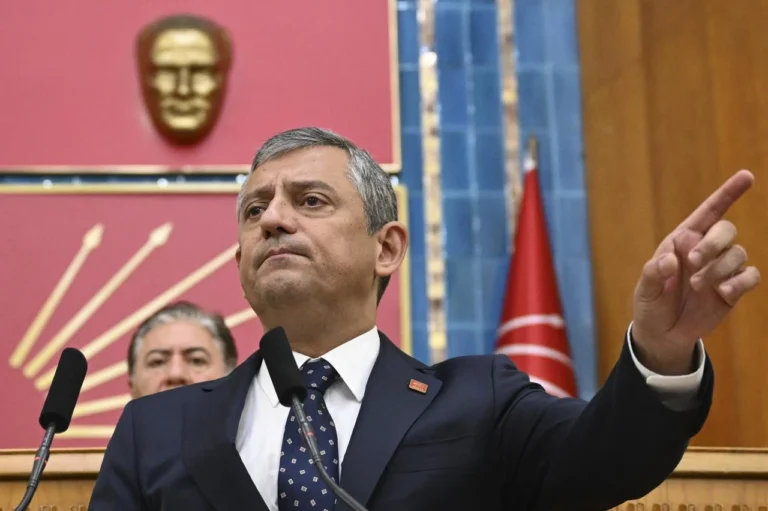
Ankara, Turkey – Özgür Özel, the ousted leader of Turkey’s main opposition Republican People’s Party (CHP), announced his formal resignation on Tuesday to launch a new political movement—a dramatic turn that could reshuffle the country’s opposition alignment.
Judicial Ruling Sparks Deep Intra-Party Rift
Özel’s decision follows a controversial court ruling in May that annulled the CHP’s 2023 convention results—which had brought Özel to the leadership—citing electoral irregularities. The court reinstated former leader Kemal Kılıçdaroğlu, who lost the 2023 presidential election to President Recep Tayyip Erdoğan, triggering intense friction among party members who viewed the verdict as politically motivated.
Addressing lawmakers in parliament, Özel described his departure from the party founded by Mustafa Kemal Atatürk as an “inevitable and sorrowful farewell,” asserting that the move marks a “new beginning” for opposition politics. While the name of the new formation has not been formally declared, reports indicate it may launch as the “New Party” (Yeni Parti) with backing from a substantial bloc of lawmakers.
Political Reconfiguration and Electoral Impact
Political analysts observe that Özel’s exit—following his landmark performance leading the CHP to widespread municipal election victories in 2024—could temporarily fragment opposition voting bases. However, if a majority of the CHP’s parliamentary delegation joins Özel, his new movement could swiftly emerge as Turkey’s primary opposition force.
The split unfolds amidst heightened political and legal pressure on opposition figures, including suspended Istanbul Mayor Ekrem İmamoğlu. The fragmentation of the traditional opposition coalition may provide strategic leverage to the ruling alliance ahead of potential early elections before 2028.
Strategic Shift in Turkish Politics: Özgür Özel’s departure to form a new party marks a critical juncture for Turkey’s opposition landscape. The split highlights the deep institutional impact of recent judicial rulings on the CHP while setting the stage for a reconfigured political realignment.