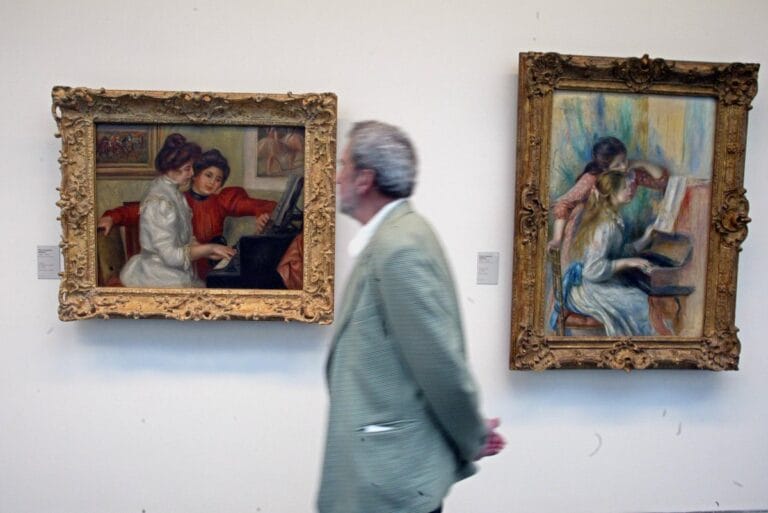
Cannes-sur-Mer, France – The robbery targeting the Museum of Impressionist Artist Pierre-Auguste Renoir in Cannes-sur-Mer, southern France, during which four paintings valued at approximately 9 million euros were stolen, has revived concerns about the ability of French museums to protect their rare art collections, especially less than a year after the theft of historic jewels from the Louvre Museum in Paris.
Striking similarities in the methods of theft
The details of the two operations reveal that the thieves relied on speed and force instead of traditional methods of infiltration. The perpetrators of the Renoir Museum operation used tools to cut the barbed wire and smash the windows, before using an electric saw to separate the iron supports that hold the paintings to the walls.
This method indicates prior planning and knowledge of the museum’s entrances and weaknesses, as well as choosing dawn as the time, allowing the operation to be carried out within a short period of time before it is discovered.
Regional museums under threat
The crime raises questions about the transfer of art-stealing gangs from major museums in the capital to regional institutions, which house artworks worth millions of euros, but do not necessarily have the same security levels as major national institutions.
This comes after the theft of historic jewels from the Louvre last year prompted French authorities to strengthen security measures at major museums, potentially making smaller institutions more attractive targets for organized gangs.
Mobilization to protect French heritage
The theft of Renoir’s paintings reopens the issue of securing French museums and art collections, amid fears of growing activity by networks specializing in stealing artworks and reselling them on the black market.
The operation also presents French authorities with a double challenge: tracking down the perpetrators of the theft and recovering the four paintings, as well as reviewing security procedures in museums outside Paris to prevent a recurrence of robberies targeting a part of the country’s artistic and cultural heritage.