
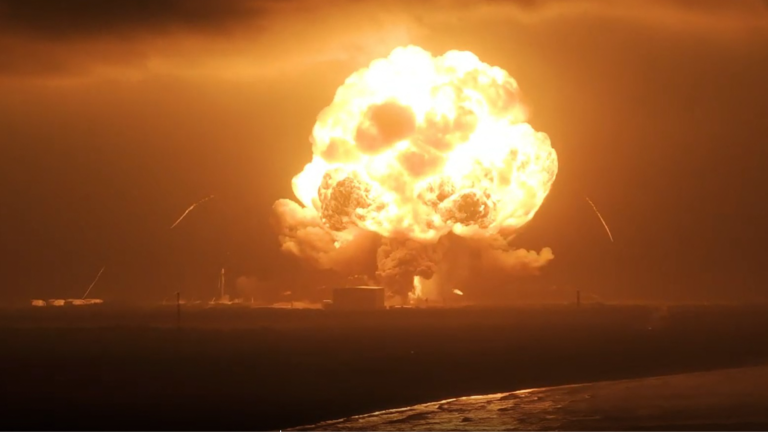
Washington – United States — The National Aeronautics and Space Administration (NASA) has unveiled preliminary, in-depth details regarding the scale of structural and material damage sustained by facilities following a violent explosion linked to the advanced “New Glenn” rocket program. The agency confirmed that joint engineering assessment and technical analysis teams are continuing their field operations around the clock to quantify the heavy losses and formulate comprehensive repair and structural rehabilitation plans. Initial logistical estimates indicate that addressing some of the severe damages could take long years before restoring full operational and technical capacities to the site.
Widespread Damage and Meticulous Reviews of Ground Support Systems
Technical reports issued by investigative and monitoring centers clarified that the rocket explosion caused extensive and deep-seated material damage. The blast tore through vital sections of the core infrastructure and complex engineering hardware utilized in static fire tests, propulsion analysis, and launch operations. This immediately necessitated meticulous, sweeping reviews and testing of all installations and electronic configurations tied to the space program to ensure maximum safety parameters for future deployments.
According to aerospace industry experts and commercial space analysts, evaluating the impacts and repercussions of such catastrophic events is never strictly limited to assessing visible physical damage. Instead, it extends to a microscopic and electronic examination of all digital control systems, communication networks, and advanced ground support facilities. It also demands a rigorous auditing of all safety protocols and operational sequences that preceded the moment of the accident. This engineering process is recognized as one of the most complex and tightly coupled phases in contemporary space programs due to the extreme interconnectedness and mutual dependence among distinct high-tech networks.
The Future of “New Glenn” in the Global Space Market
Official entities managing the crisis emphasized that federal investigations are currently focusing on pinning down the exact, precise technical causes underlying the explosion. Teams are analyzing digital data packets and telemetry profiles recorded during the critical final moments immediately preceding the crash, aiming to engineer radical solutions that will prevent the recurrence of such technical failures. In parallel, operational studies are underway to determine the direct impact of this accident on the schedules, timelines, and international commitments of ambitious space projects associated with the launch vehicle.
Rocket engine specialists suggest that any ballistic damage to launch facilities or static test stands inherently demands extensive structural rebuilding and technical modernization. This is particularly true if the destruction implicates basic concrete foundations or cryogenic fuel delivery systems, which require a completely fresh technical certification and licensing strategy from regulatory bodies before returning to active service. For this specific reason, certain phases of repair and technical qualification could extend for years depending on the severity of the wreckage and the volume of resources and funding required.
The “New Glenn” rocket program is a major, pivotal strategic initiative within the modern commercial space sector. It was engineered and designed specifically to contribute efficiently to deploying heavy-class satellites and massive payloads to various orbital coordinates, supporting efforts to expand the United States’ competitive capabilities in space launches and maintain leadership in the global space market.
This tragic event underscores once again the immense technical and engineering hurdles confronting the modern aerospace industry. Developing and manufacturing modern rockets requires highly complex and financially draining field testing, while the probability of technical malfunctions and sudden accidents remains an ongoing reality despite monumental technological leaps in computer-aided design, virtual simulation, and safety engineering. As investigative and forensic teams push forward, the global scientific community and international space agencies closely anticipate the release of final findings that will accurately define the true impact of the accident on future blueprints and upcoming launches—with firm assertions that the integrity of systems and human structures will remain the absolute top priority before resuming any new operational flights.