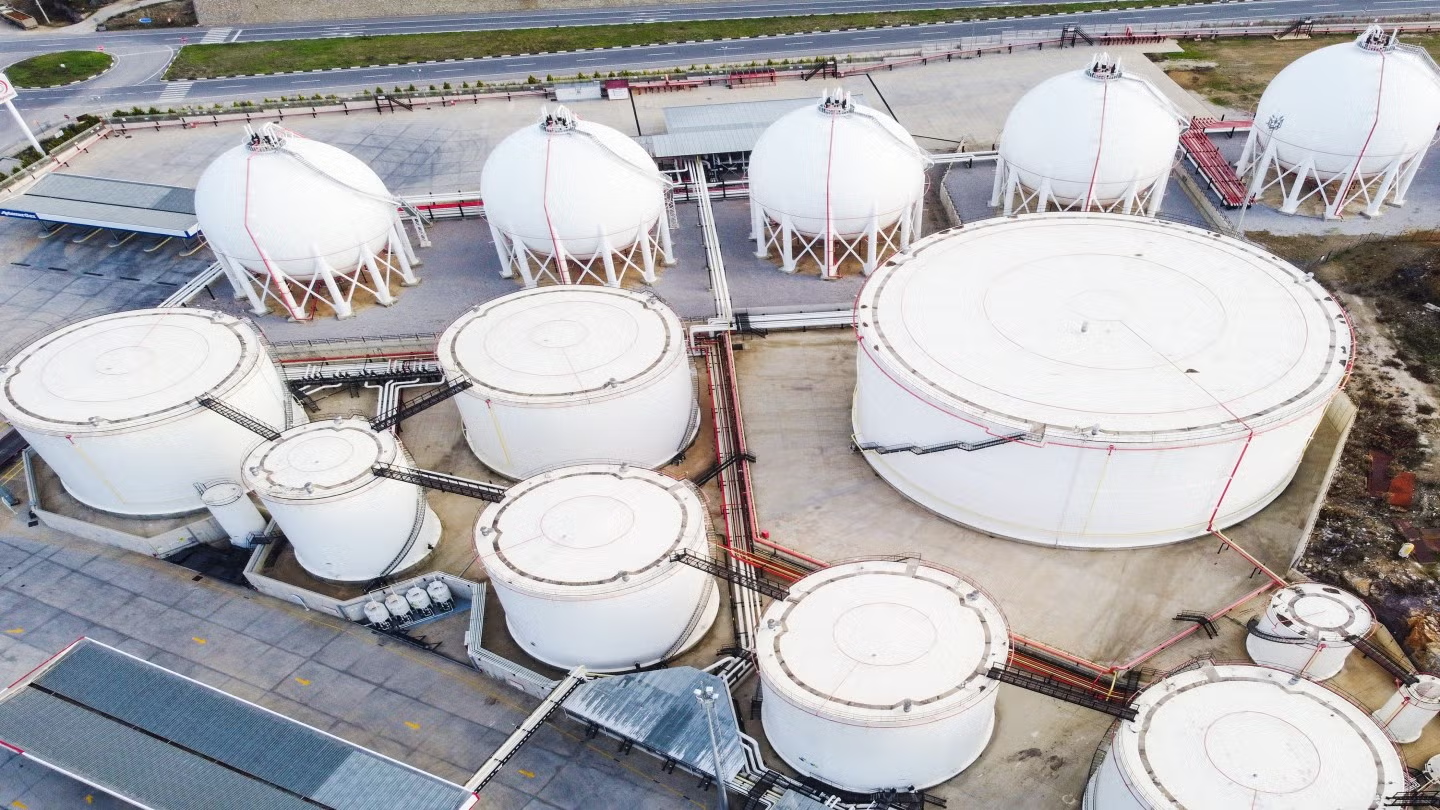
Cairo – The Egyptian government is engaged in advanced negotiations with several global energy majors to sign long-term liquefied natural gas (LNG) supply agreements, a strategic move intended to secure domestic energy supplies and stabilize power grids amidst declining domestic production and heightened international competition for LNG cargoes.
Multi-Year Supply Negotiations and Market Flexibility
The negotiations involve major energy operators, including Shell, TotalEnergies, BP, and Hartree Partners, alongside active discussions with US suppliers to ensure flexible delivery terms. Cairo aims to secure between 15 and 18 LNG cargoes per month under multi-year contracts spanning three to five years. The move seeks to buffer the domestic economy from geopolitical instability and maritime disruptions in key regional transit routes such as the Strait of Hormuz.
Energy analysts emphasize that locking in long-term supply structures is critical for Egypt to reduce reliance on the volatile spot market, where sudden price spikes have significantly inflated national energy procurement costs.
Surging Import Costs and Declining Domestic Output
Analytical estimates indicate that heightened geopolitical friction has caused Egypt’s gas import costs to surge, with equivalent LNG volumes rising from approximately $500 million to $1.65 billion. Projections suggest that Egypt’s annual natural gas import bill could range between $8 billion and $11 billion once the new long-term agreements are fully operationalized.
Official trade data shows Egypt imported approximately 985 billion cubic feet of natural gas via pipelines and LNG shipments between July 2025 and June 2026, with imports projected to reach 1.08 trillion cubic feet in the current fiscal year. The increased import volume coincides with a drop in average domestic production to below 4.4 billion cubic feet per day in fiscal year 2025-2026, with forecasts indicating a potential further decline to around 4.2 billion cubic feet per day, despite ongoing government initiatives to clear arrears owed to foreign energy producers and incentivize new upstream development.
Egypt’s pursuit of long-term LNG supply contracts highlights a strategic pivot toward safeguarding national energy security, mitigating exposure to spot market volatility while addressing domestic production deficits and broader regional supply chain uncertainties.