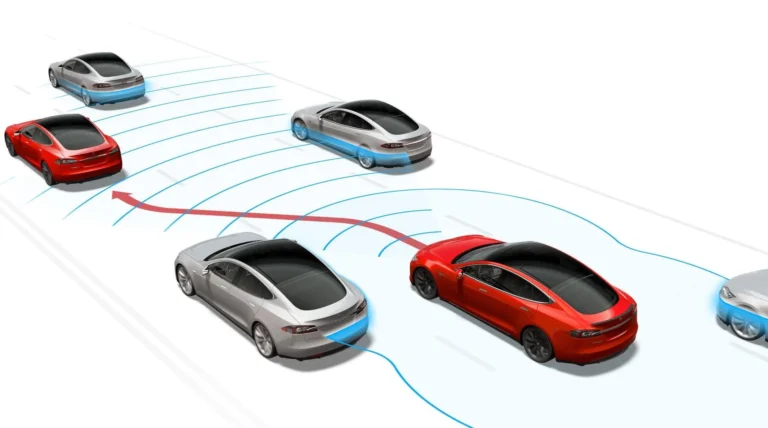
Austin – United States of America — Debate and sharp internal friction are intensifying within Tesla over the future and trajectory of its Full Self-Driving (FSD) suites. These developments surface amidst escalating internal arguments regarding the actual, real-world safety metrics of the technology, and whether it can be comprehensively and fundamentally relied upon without direct human intervention across diverse driving profiles and unpredictable road conditions.
Engineering Reservations Regarding Performance in Urban Environments and Harsh Weather
According to sources closely familiar with the ongoing discussions inside the company’s software and technical development division, there are core structural reservations and mounting anxieties among certain engineers and technical officials regarding the system’s performance capacity inside highly complex geographic environments. Flashpoints include densely congested urban corridors, unregulated intersections, and highly dynamic scenarios where road boundaries and elements shift abruptly. The primary engineering concern focuses on the software’s potential failure to execute highly accurate, split-second decisions—thereby prompting major institutional questions regarding the technology’s absolute operational readiness for mass commercial deployment.
These technical apprehensions additionally extend to the system’s ability to safely navigate severe weather and climatic disruptions, such as torrential rainfall or dense fog banks. Specialists note that under these parameters, the processing capacity of digital sensors and peripheral cameras to accurately map and decode road layouts becomes visibly compromised and degraded. Consequently, this diminishes the system’s overall efficiency and response mechanism in real-world environments compared to its performance metrics achieved within closed testing facilities or via pre-aggregated laboratory data.
Regulatory Oversight and the Collision of Innovation with Public Safety
Reports and analytical reviews monitoring the corporate crisis indicate that these heated sessions are no longer restricted to purely structural or technical scopes inside the labs. Instead, they have collided directly with convoluted legal and regulatory challenges. This comes at a time when global regulatory watchdogs and highway safety administrations are sharply intensifying their oversight regarding the integrity of driver-assist features. Specifically, this has followed a sequence of highway accidents, several of which were directly attributed to drivers’ partial or excessive over-reliance on these nascent technologies.
Despite these transparent internal pushbacks and critiques, Tesla’s executive leadership continues to aggressively accelerate the deployment and maturation of its autonomous platform through successive Over-the-Air (OTA) software updates. This programmatic approach relies strategically on processing and analyzing massive cloud-based streams of live telemetry. The data is harvested continuously from millions of kilometers driven daily by Tesla vehicles worldwide. The company firmly maintains that this cumulative algorithmic architecture is engineered to incrementally optimize system accuracy. Additionally, it is meant to systematically minimize operational anomalies over time.
Concurrently, automotive tech market monitors and analysts suggest that the hyper-competitive global marathon to pioneer autonomous driving imposes immense corporate pressure to fast-track development and launch windows. This environment could potentially unleash a broader societal, legal, and ethical debate, balancing the mandate for rapid technological innovation against rigid public safety benchmarks—particularly given the stark variance in legislative frameworks and structural laws from one nation to another regarding the authorization of autonomous systems on public highways.