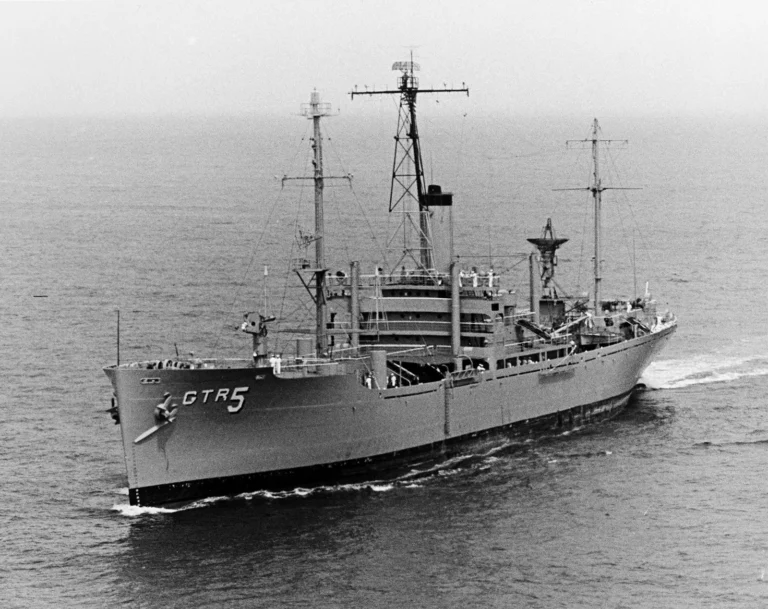
Washington, USA – The USS Liberty incident remains one of the most mysterious and controversial moments in the military and political history of the United States. On June 8, 1967, while on an intelligence-gathering mission in international waters off the Sinai Peninsula, the ship was subjected to a violent air and naval attack by Israeli forces. Consequently, 34 crew members died and over 170 were injured.
Washington, USA | The USS Liberty incident remains one of the most mysterious and controversial moments in the military and political history of the United States. On June 8, 1967, while on an intelligence-gathering mission in international waters off the Sinai Peninsula, the ship was subjected to a violent air and naval attack by Israeli forces. As a result, 34 crew members died and over 170 were injured.
“Mistaken Identity” vs. Eyewitness Accounts
In a related context, Israeli authorities declared following the incident that the attack was a “tragic case of mistaken identity,” believing the ship was part of the Egyptian Navy. Although Tel Aviv apologized and later paid compensation, many of the ship’s survivors and former US officials rejected this narrative. They asserted that the ship was clearly flying the American flag and that the attack was intentional.
Furthermore, these contradictions fueled questions that persist today:
Was the attack intentional to prevent the ship from monitoring specific military movements?
How did Israeli identification systems fail to identify an allied ship?
Why have investigation files remained classified or incomplete in the view of many researchers?
Impact on the Strategic Alliance
On another note, the USS Liberty incident served as a true test for the durability of the US-Israel alliance. Despite Washington’s anger, shared strategic interests during the Cold War prevented a diplomatic break. Nevertheless, the incident left deep scars in the memory of the American military. It is still regarded today as a prime example of a highly suspicious “friendly fire” incident.
In conclusion, the USS Liberty case continues to emerge in research circles whenever US-Tel Aviv relations are discussed. It is a story of human tragedy and political ambiguity, illustrating how a single wartime military event can cast a shadow for decades over international alliances. Furthermore, it still remains a mystery awaiting the full revelation of its historical details.