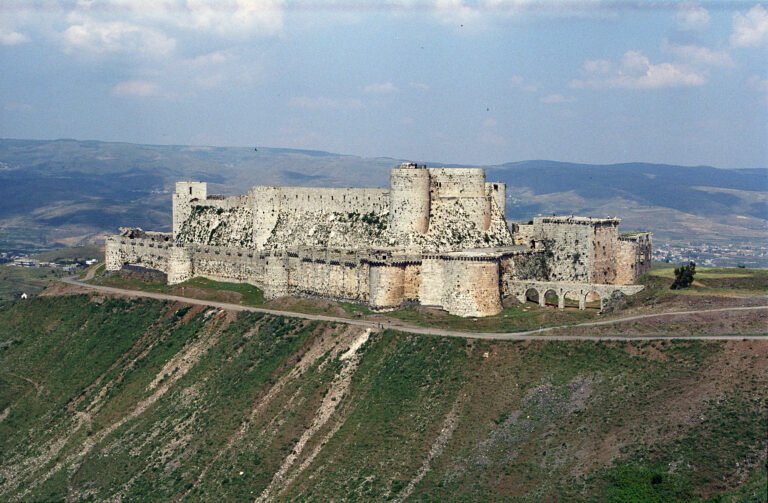
Homs – Syria — The conquest of the historic city of Homs stands as one of the most pivotal and structurally transformative events in the annals of the early Islamic expansions within the Levant. The entry of Muslim forces into the city marked a highly critical strategic shift in the macro-confrontation against the Byzantine Empire, fueled by Homs’ unique geographic placement and its paramount military and economic utility in the region during that epoch.
The Fall of the Ultimate Byzantine Military Stronghold
During this historical era, Homs was fortified as one of the most vital and formidable Byzantine military nerve centers in the central Levant. It functioned as a primary staging ground for troop concentrations and managed sensitive logistics and supply lines running between the northern and southern sectors of the region. This structural importance elevated the city into a primary, high-priority objective for the Muslim armies as they progressively scaled their territorial presence across the Levant.
Following a succession of intense, hard-fought engagements in surrounding territories, the Muslim forces advanced deliberately toward the city. This movement was part of a tightly coordinated military doctrine aimed at eroding Byzantine deep-theater influence across the Levant, brilliantly capitalizing on the operational retreat and exhaustion plaguing the Byzantine legions due to compounding military pressure across multiple volatile fronts. Historical chronicles emphasize that the entry of Muslims into Homs was not merely a standalone, direct tactical clash. Instead, it materialized within a broader framework of highly organized maneuvers orchestrated by the highly capable commanders of the early conquests. The city was meticulously approached as a critical strategic pivot point that absolutely required containment to guarantee permanent military and political stability over the entire theater.
A New Administrative Launchpad and Integrated Cultural Diffusion
As public safety and political architectures stabilized within the city, Homs assumed a pioneering new role within the geography of the burgeoning Islamic state. It rapidly evolved into a top-tier administrative and military headquarters, contributing effectively to the governance of regional affairs and structurally linking Homs to the network of newly opened metropolitan areas across the Levant. Furthermore, the city subsequently witnessed waves of profound cultural and civilizational diffusion between its indigenous inhabitants and the new arrivals. This interaction fostered a highly cohesive, novel social ecosystem that left a deeply positive imprint on daily routines, trade frameworks, and commercial activities.
Historians and researchers posit that the baseline significance of the conquest of Homs is not strictly confined to its immediate kinetic or military dimensions. Rather, it represents a foundational milestone that substantially consolidated and anchored the Islamic presence within the absolute heart of the Levant, clearing a viable path for subsequent, advanced phases of strategic expansion toward other territories still operating under Byzantine governance. Through this momentous historical chapter, Homs cemented its legacy as one of the most illustrious milestones of the early Islamic expansions, materializing as a strategic turning point that explicitly reconfigured and redrew the geopolitical and military maps of the entire region during that momentous historical era.