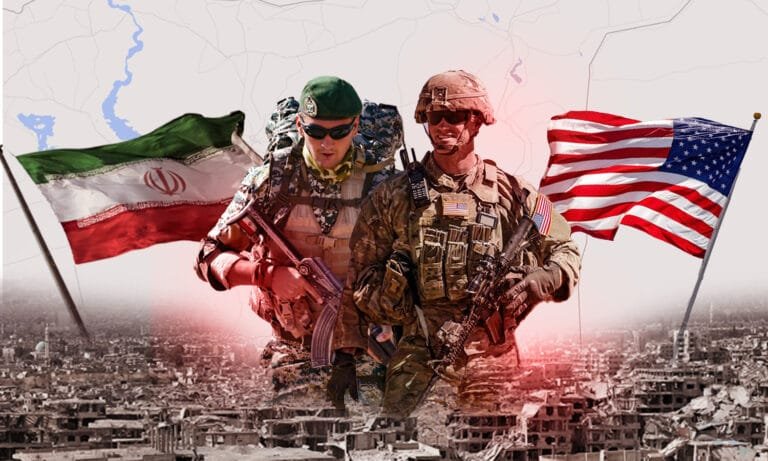
Washington, DC – The military confrontation between the United States and the Islamic Republic of Iran entered its sixth day. The past few hours have witnessed an unprecedented escalation, including intensive US airstrikes inside Iranian territory. In response, Iran has launched attacks deep into the Gulf region. As a result, security tensions in the region have reached record highs.
US strikes: targeting infrastructure and military capabilities
U.S. Central Command (CENTCOM) announced the conclusion of the sixth wave of military operations. The operations, conducted by fighter jets, drones, and warships, targeted dozens of Iranian military sites, coastal surveillance systems, and air defenses. U.S. President Donald Trump asserted that the operations achieved “great successes.” The operations aimed to degrade Iran’s military capabilities and hold Tehran accountable for targeting commercial vessels.
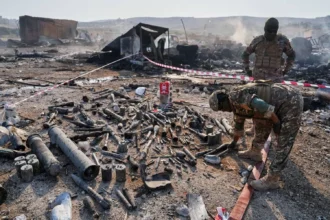
The US bombing targeted strategic areas in southern Iran. The attacks in Hormozgan province focused on destroying six vital bridges, disrupting transportation. The Iranian Ministry of Energy announced that electricity transmission networks in Bandar Abbas were damaged as a result of the bombing. Efforts by the Tavanir Company to restore network stability are ongoing.
The death toll and the expansion of the clashes
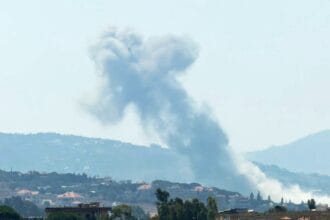
Conflicting casualty figures emerged in the early hours. Hormozgan University of Medical Sciences reported seven deaths and nine injuries from attacks targeting bridges in Bandar Khamir. Simultaneously, explosions spread to Bushehr, Ahvaz, and Lorestan. Injuries and material damage were reported at military sites and vital infrastructure. There were also reports of fighter jets flying over other Iranian cities.
Iranian attacks and Gulf reactions
In response, Iran launched attacks targeting Gulf states. Kuwaiti air defenses intercepted missile and drone attacks. Sirens wailed in Bahrain after Iran announced it had targeted the US Fifth Fleet base. In Doha, the Qatari government issued security warnings and raised its alert level after explosions were heard. The government urged citizens to remain in safe locations.
The naval blockade and tensions in the waterways
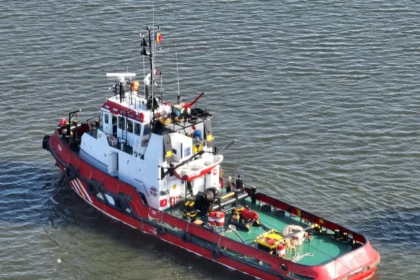
In a related development, the US military announced that Marines had inspected the oil tanker MT1 Yao in the Arabian Gulf. This move was intended to ensure the enforcement of the naval blockade. The operation underscores the ongoing power struggle in strategic waterways. While more than 50,000 US troops remain on high alert in the region, questions persist about the long-term US strategy. This comes amidst the Pentagon’s silence and the increasingly complex military landscape, which now threatens the security of the entire region.