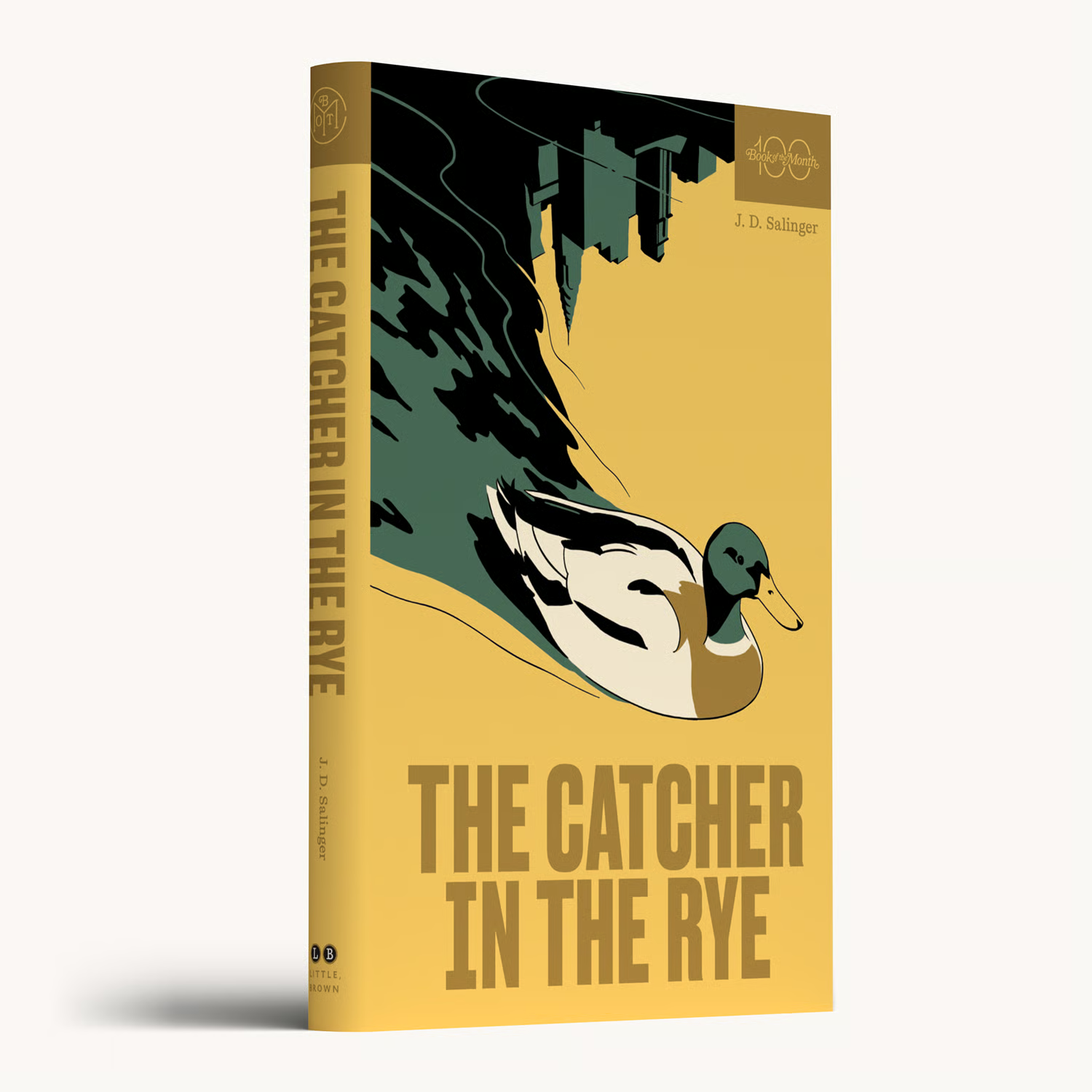
On the anniversary of its publication, the literary world reflects on the legacy of J.D. Salinger’s “The Catcher in the Rye,” first published in 1951. More than just a novel, it evolved into a cultural and social phenomenon that altered the course of modern literature, becoming a definitive voice for generations craving freedom and searching for identity.
Holden Caulfield: An Icon of Alienation
The novel centers on Holden Caulfield, a teenager grappling with an existential crisis after leaving his boarding school. Through this character, Salinger masterfully captured the feelings of alienation and rebellion experienced by youth. Holden’s journey through the streets of New York, in pursuit of truth and sincerity, became a symbol of the struggle between innocence and the phoniness of the adult world. It is this narrative authenticity that endeared the book to readers, cementing Holden as an immortal literary figure.
An Impact That Transcends Borders
For over seven decades, “The Catcher in the Rye” has reached readers across the globe, translated into dozens of languages and selling millions of copies. Despite the controversy it sparked during various eras due to its candid themes and language, it solidified its place as a cornerstone in academic curricula and critical discourse, proving itself as a profound study of the human psyche.
A Milestone in Modern Literature
Literary scholars agree that the novel stands as a milestone in modern American literature, influencing generations of writers who were inspired by Salinger’s ability to delve deep into the human character. Even today, the novel remains an essential reference for discussions on freedom, rebellion, and self-discovery, ensuring its status as a timeless classic that never loses its luster, no matter how many years pass.