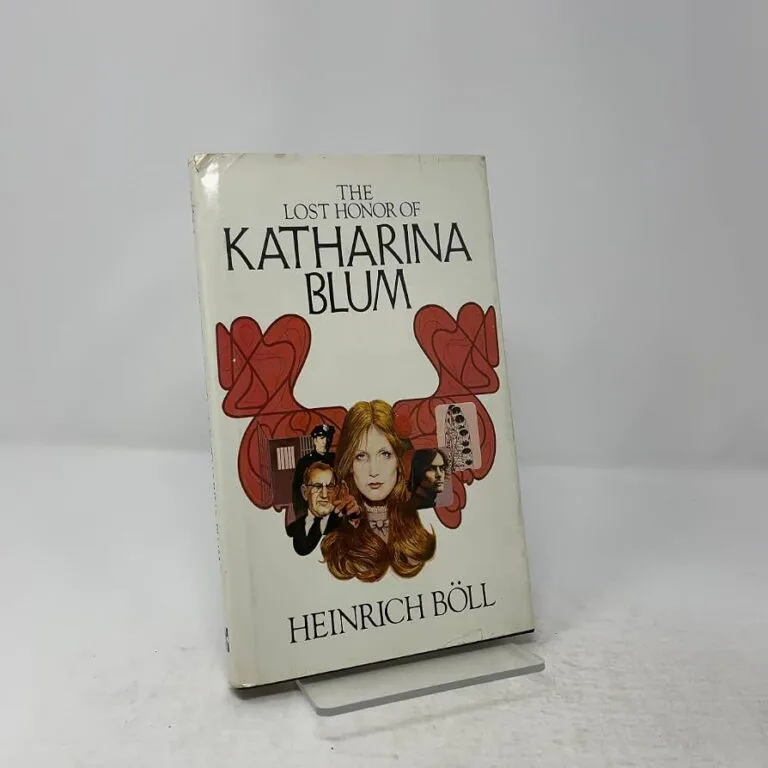
Although Heinrich Böll’s “The Lost Honour of Katharina Blum” (Die verlorene Ehre der Katharina Blum) was published in 1974, it feels startlingly contemporary today. The work, penned by the German Nobel laureate decades ago, presciently foresaw the phenomenon of “trending” topics and the trial-by-public-opinion that dominates our social media-driven lives.
A Story Where Truth is the Victim
The novel revolves around Katharina Blum, an ordinary woman whose life is turned upside down when she becomes the target of a vicious media smear campaign. Her tragedy begins when she is linked to a man wanted by authorities. Overnight, she finds herself besieged by rumors, defamation, and twisted facts. It is an early, vivid depiction of the media’s power—whether traditional in the past or digital today—to manipulate public opinion and destroy an individual’s reputation long before facts are verified.
A Visionary View of Media Power
Literary critics maintain that Böll’s work was not merely a political novel but a visionary insight into what happens when media platforms become “field courts,” passing judgment before facts are established. Today, in the age of viral digital information, many find themselves in Katharina Blum’s position, where a single unverified post or news item can destroy a career or social standing within hours.
A Timeless Warning
The novel remains a staple in literary and academic circles, not just for its artistic merit, but for its profound insights into digital-era challenges. It serves as a stern warning about the danger of prioritizing “trends” over truth. It compels us to ask: How many “Katharina Blums” do we sacrifice daily at the altar of online public opinion? It is an invitation to reflect on the ethics of consuming information, a poignant reminder that behind every “tweet” or “share” is a human being whose honor and existence can be obliterated by the click of a button.