
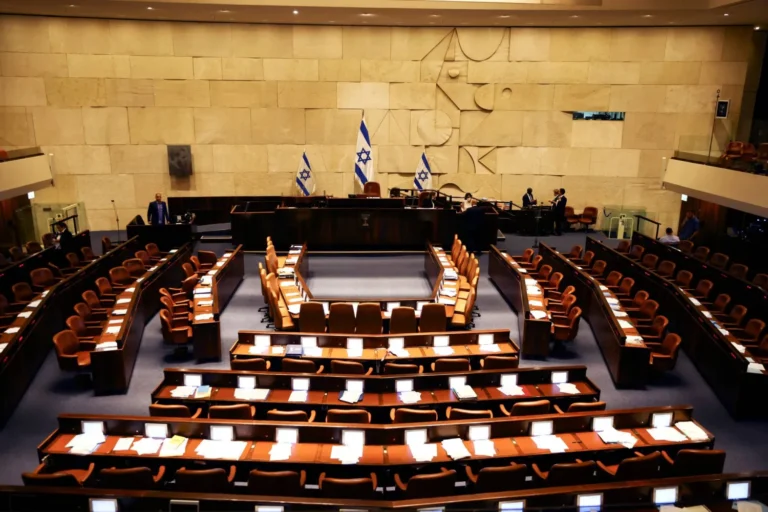
Tel Aviv, Israel – In a pivotal political move, the Israeli Knesset formally voted on Friday to dissolve itself, paving the way for early parliamentary elections scheduled for October 27, 2026. The decision to dissolve the Knesset came after a vote in which 62 out of 120 members supported a bill on party funding. This bill included a provision for dissolving the Knesset and advancing the election date.
Behind the scenes of the voting and last-minute disagreements
The session was marked by tension and uncertainty before the law’s passage. This stemmed from sharp disagreements over party funding. Shas party leader Aryeh Deri initially refused to support the law, arguing that increased funding would benefit the opposition more than his own party, and fearing public backlash. Failure to pass the law would have meant postponing the dissolution of the Knesset until the following week. This would have given the government an opportunity to continue pushing through controversial bills, but it would have deprived parties of millions allocated for their election campaigns. Ultimately, these circumstances led the parties to reach a compromise.
Parallel legislative decisions
In a busy late-night session, the Knesset passed a package of laws before parliament went into its official recess on Friday. The most significant of these was the approval of a five-year extension to the reduction of mandatory military service. They also passed a law establishing a new broadcasting authority with an annual budget of 25 million shekels. This authority will operate under policies set by the Director General of the Ministry of Communications. It will replace the existing regulatory bodies.
Anticipated election battle
With the start of the parliamentary recess, preparations for the upcoming election campaign officially begin. Israeli Prime Minister Benjamin Netanyahu, 76, has confirmed his intention to run for another term, describing it as potentially the most important in his long political career. Despite Netanyahu’s determination, his ambitions face significant challenges, with opinion polls indicating a desire for change among a majority of voters. Meanwhile, former Chief of Staff Gadi Eisenkot has emerged as a leading contender to challenge Netanyahu’s hold on power. This situation places the Israeli political landscape at a critical juncture.