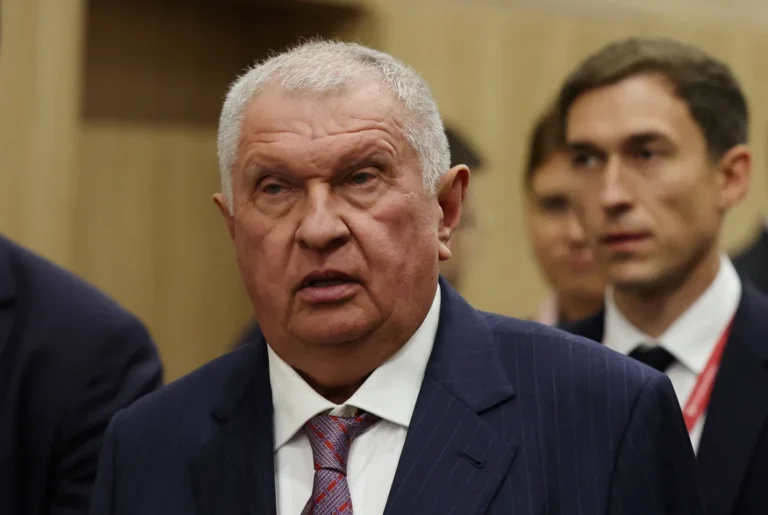
Moscow, Russia – Igor Sechin, CEO of Rosneft, Russia’s largest oil producer, issued a stark warning on Saturday. He asserted that any potential closure of the Strait of Hormuz would not only constitute a regional crisis but also pose a direct threat to all maritime trade routes worldwide.
Sechin explained that the repercussions of closing this vital artery would extend beyond the Arabian Gulf, jeopardizing other strategic shipping lanes. He specifically mentioned the Straits of Malacca, Bab el-Mandeb, and Gibraltar, which could also face cascading disruptions.
The Strait of Hormuz is one of the world’s most important waterways, through which approximately one-fifth of the world’s seaborne oil supply passes. It is therefore considered the global energy lifeline, connecting the Gulf states to markets in Asia, Europe, and North America.
Implications for energy security
These warnings come amid escalating geopolitical tensions, with global markets on edge.
Experts believe that any prolonged disruption to this strategic waterway could lead to record-breaking spikes in oil prices. This would also negatively impact shipping costs, marine insurance, and commodity prices.
Sechin specifically warned of the long-term effects of such tensions, emphasizing that continued instability would inevitably undermine global oil demand.
Divergent international interests
In analyzing the geopolitical dimensions of the crisis, the CEO of Rosneft pointed out that American oil and gas companies could be the biggest beneficiaries of these tensions. He predicted they would reap additional profits exceeding $60 billion this year as a result of higher prices and the volatility caused by the Strait’s closure.
On the other hand, Sechin expressed appreciation for China’s ability to handle these crises, emphasizing that it is the country best equipped to withstand the repercussions thanks to its well-considered government policies.
He explained that Beijing pursues a balanced energy security strategy based on a realistic assessment of risks and diversification of sources. This gives it greater resilience in the face of disruptions to international supply chains.
Sechin’s remarks further highlight the global economy’s dependence on the stability of maritime routes. They also demonstrate how a single geopolitical event can reshape the energy landscape and international politics.